Do Bail Bondsman Take Credit Cards How It Works
Do bail bondsman take credit cards? Yes, many do. Learn fees, what you can charge, and how to pay with Blandon Bail Bonds in Miami.

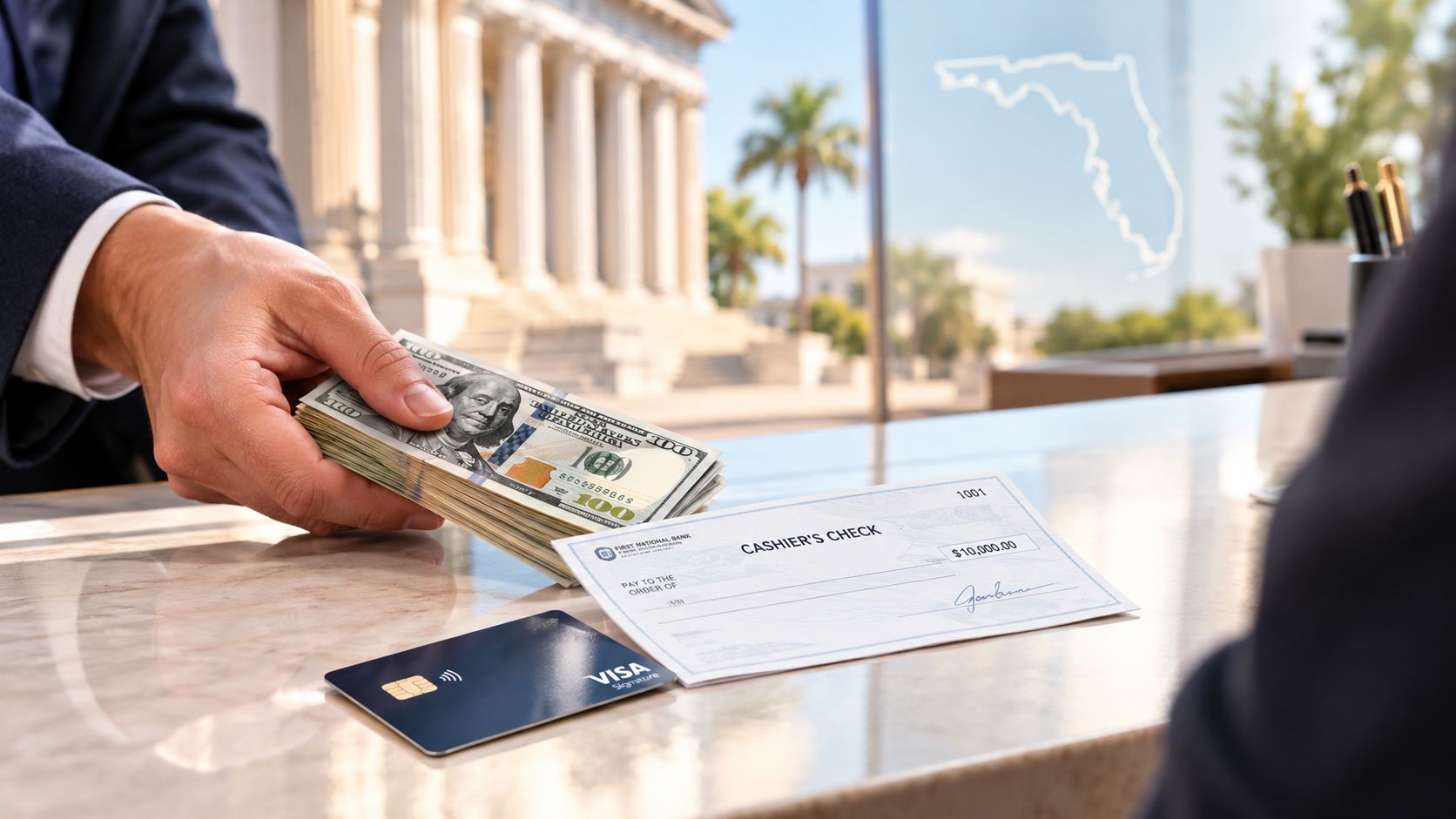
Yes, most bail bondsmen, including Florida agencies like Blandon Bail Bonds, take major credit cards for the premium and collateral. Florida's published collateral schedule includes fees such as $20 on bonds from $100.01 to $200 and $800 on bonds from $9,000.01 to $10,000, but the rules require clear disclosure and prohibit agents from passing ordinary card-processing costs to the customer.
It's late, a family member is being held at Turner Guilford Knight Correctional Center, and your phone search has narrowed to one urgent question: can a credit card get them released tonight? The answer is generally yes, but the way the card is used matters. A premium, collateral, and card-related fee are not always treated the same way.
Florida allows licensed bail bond agents to accept credit cards, while also requiring documentation around collateral payments and fee disclosures. That means you shouldn't have to guess what you're paying, who must authorize the transaction, or whether a charge is refundable.
The practical questions usually come quickly. Does the cardholder have to be the person being arrested? Can a relative pay remotely? Will the charge cover the premium, collateral, or both? What should appear on the receipt? This guide answers those questions in plain language for families dealing with a Miami-Dade release, including TGK Jail cases.
Blandon Bail Bonds provides around-the-clock intake and payment coordination for families who need to act outside regular business hours. With the right information ready, a card payment can be one part of a predictable release process rather than another source of confusion.
Introduction When You Need to Pay Bail Right Now
A family member calls from outside TGK Jail. Someone else is trying to find the booking information. The court has set bail, but the family doesn't have that amount sitting in a checking account. One person asks whether a credit card can solve the immediate problem, while another worries about hidden fees and whether the cardholder must appear in person.
In Florida, bail bond agents are explicitly permitted to use credit cards when issuing bail bonds. The important limitation is that an agent can't pass a general credit-card acceptance fee, surcharge, or commission to the customer. Under Florida's bail bond payment rule, the agent bears those card-processing costs.
That doesn't mean every card transaction is identical. Florida's rules distinguish between paying the bond premium and using a card for collateral. When a card is used for collateral, the applicable fee must be clearly shown on the collateral receipt, acknowledged by the payer, posted visibly in the agency lobby, and provided to the customer. The Florida collateral statute makes disclosure part of the transaction.
What you should expect before paying
A professional agency should first confirm the defendant's identity, the facility, the bond amount, and the type of bond required. The agent can then explain the premium, whether collateral is needed, which person must sign the agreement, and how the card will be processed.
You should receive clear answers to these questions:
- What is the payment for? Ask whether the card covers the nonrefundable premium, collateral, or an approved payment arrangement.
- Who is responsible? The cardholder, indemnitor, and defendant may be different people, and each role should be explained.
- What will I receive? Keep the signed agreement, itemized receipt, and any collateral documentation.
- When does release begin? The agent must post the bond, and the detention facility then completes its own release procedures.
A credit card can provide speed, but it doesn't remove the legal responsibility attached to co-signing. Read the agreement, confirm every court-date obligation, and ask the agent to explain anything that isn't clear. You don't need to solve the entire process alone, but you do need to know what you're authorizing.
How Bail Bonds Work and What Your Card Actually Pays For
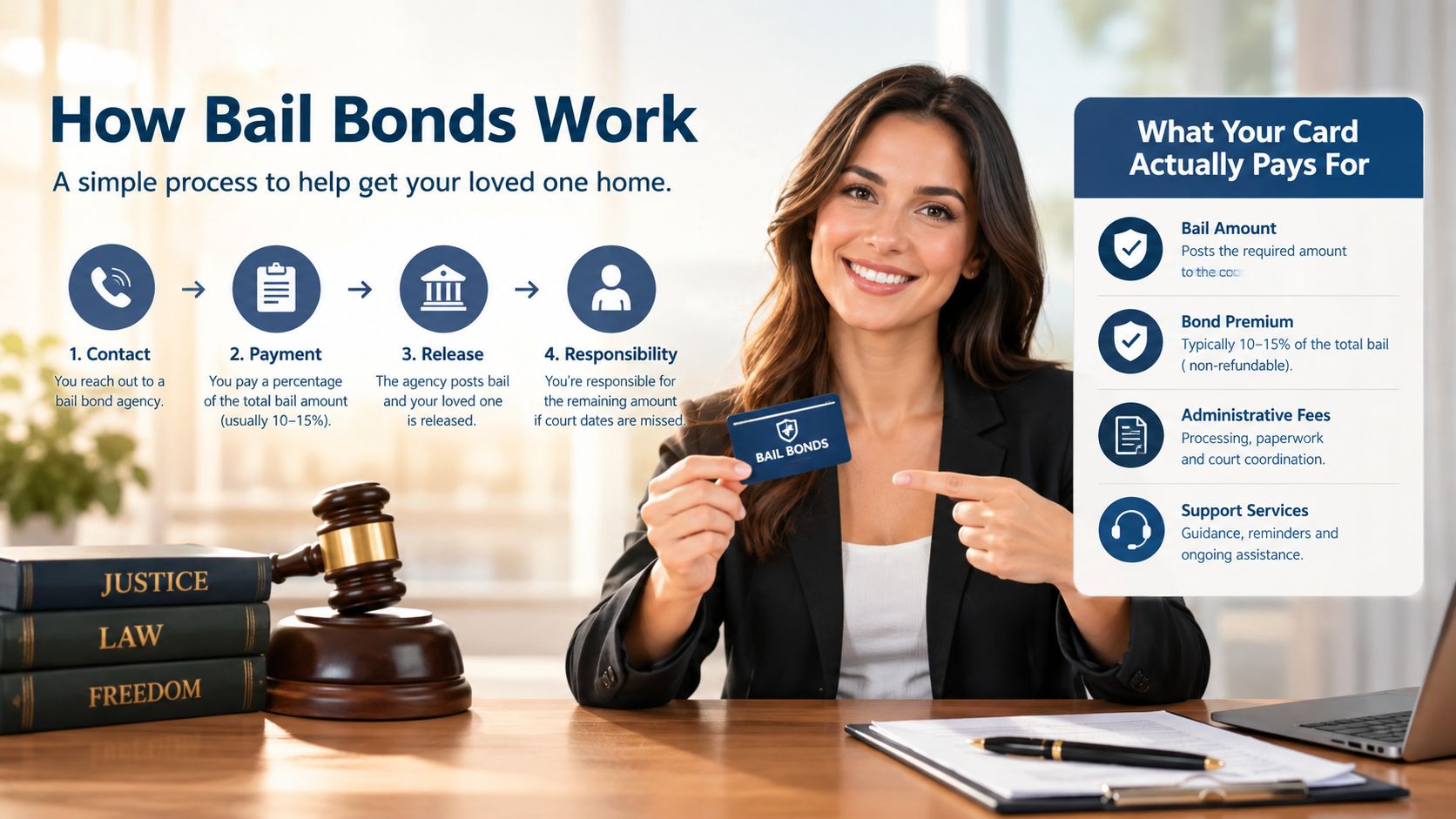
Start with the difference between cash bail and a surety bail bond. With cash bail, the person posting bail provides the full court-required amount directly through the court's process. With a surety bond, a licensed bail agent guarantees the appearance obligation to the court, and the family pays the agent's premium for arranging that guarantee.
A useful analogy is a co-signer on a loan. The bail agent is taking on a financial obligation tied to the defendant's court appearances. The person who signs the bond, often called the indemnitor, promises to help ensure that the defendant follows the release conditions and attends court.
In Florida, families commonly encounter a 10% premium for a standard surety bond. The premium is the agent's charge for issuing the bond and is generally nonrefundable once the bond has been provided. The exact transaction still depends on the bond type, the agency's underwriting decision, and the documents required.
The two payments families often confuse
The premium pays for the bond service. It isn't a deposit that comes back when the criminal case ends. A credit card used for the premium is paying the agent's charge for issuing the surety bond.
Collateral is different. An agent may request an asset or other security to protect against the financial risk of the bond. Collateral may be returned after the bond obligation ends, provided the agreement's conditions have been met and no lawful claim remains.
That distinction matters because Florida's specific credit-card fee disclosure rules attach to collateral payments. Families should ask the agent to identify each line item before authorizing a card:
- The court-set bail amount.
- The bond premium.
- Any collateral being requested.
- Any permitted credit-card fee associated with collateral.
- The person responsible for the agreement.
A card doesn't pay the court's promise in the abstract. It pays a specific obligation under a written agreement. For a family arranging release from TGK, understanding that agreement is as important as having an available credit limit.
For a broader explanation of the Florida process, review how a surety bond works in Florida. The key point is simple: release comes from the agent posting the bond, while the card is only one method for funding the transaction.
Florida Rules for Credit Card Payments on Bail Bonds
Florida's approach combines permission with consumer-facing documentation. Bail bond agents may accept credit cards, but the rules don't treat card use as an excuse for unexplained charges. The customer should be able to see what is being charged, why it applies, and who is responsible for it.
The first rule is about ordinary processing costs. A bail bond agent can't pass a credit-card acceptance fee, surcharge, or commission on to the person posting the bond. Those costs must be borne by the agent. This is why a family should question an unexplained add-on described only as a general card convenience fee.
Collateral fees follow a different rule
Florida separately addresses a fee imposed by the card issuer when the card is used to pay collateral. The fee may be charged only when it is:
- Shown on the collateral receipt.
- Acknowledged by the payer.
- Posted conspicuously in the agency lobby.
- Provided in a copy to the person using the card.
The published Florida schedule gives concrete examples. It lists $20 for bonds from $100.01 to $200, $50 from $400.01 to $500, $75 from $500.01 to $750, $145 from $1,750.01 to $2,000, $320 from $3,000.01 to $4,000, $720 from $8,000.01 to $9,000, and $800 from $9,000.01 to $10,000. These figures appear in the Florida criminal bail-bond collateral fee schedule.
Those examples don't mean every payment produces the same charge. They show why the receipt and posted schedule matter. The amount depends on the applicable bond range and the purpose of the card transaction.
Practical rule: Before you authorize the card, ask the agent to identify the premium, collateral, and any permitted collateral-related card fee as separate items.
Florida has also historically distinguished private bail agents from government cash-bond systems. A Florida legal opinion from 1989 concluded that a monetary appearance bond wasn't a government debt that local sheriffs could accept by credit card. That distinction helps explain why a private bail agency may accept a card even when a government office follows different payment rules.
Transparency protects both sides. The agency can document its compliance, and the family can compare the written quote with the final receipt.
How Paying Your Bail Bond With a Credit Card Works Step by Step
A card payment usually fits into a larger intake process. The agent first needs to know who is detained and what bond has been set. A smooth call starts with the defendant's full name, date of birth, booking information if available, facility name, and the contact details for the person signing the bond.
First, verify the bond and the payer
The agent confirms the bond amount and determines whether the matter involves a county, state, federal, or immigration process. Those categories can require different paperwork and approval. The agent also identifies the cardholder and the proposed indemnitor.
The cardholder doesn't automatically become the person legally responsible for the bond. A relative may provide payment while another approved person signs the indemnity agreement. Ask who must sign, whether the cardholder needs to provide identification, and whether an authorized user can complete the transaction.
Next, review the quote and agreement
The agent should explain the premium before taking payment. If collateral is involved, ask for a separate description of the collateral requirement and any applicable fee schedule. Don't rely on a verbal total if the agreement or receipt will show different categories.
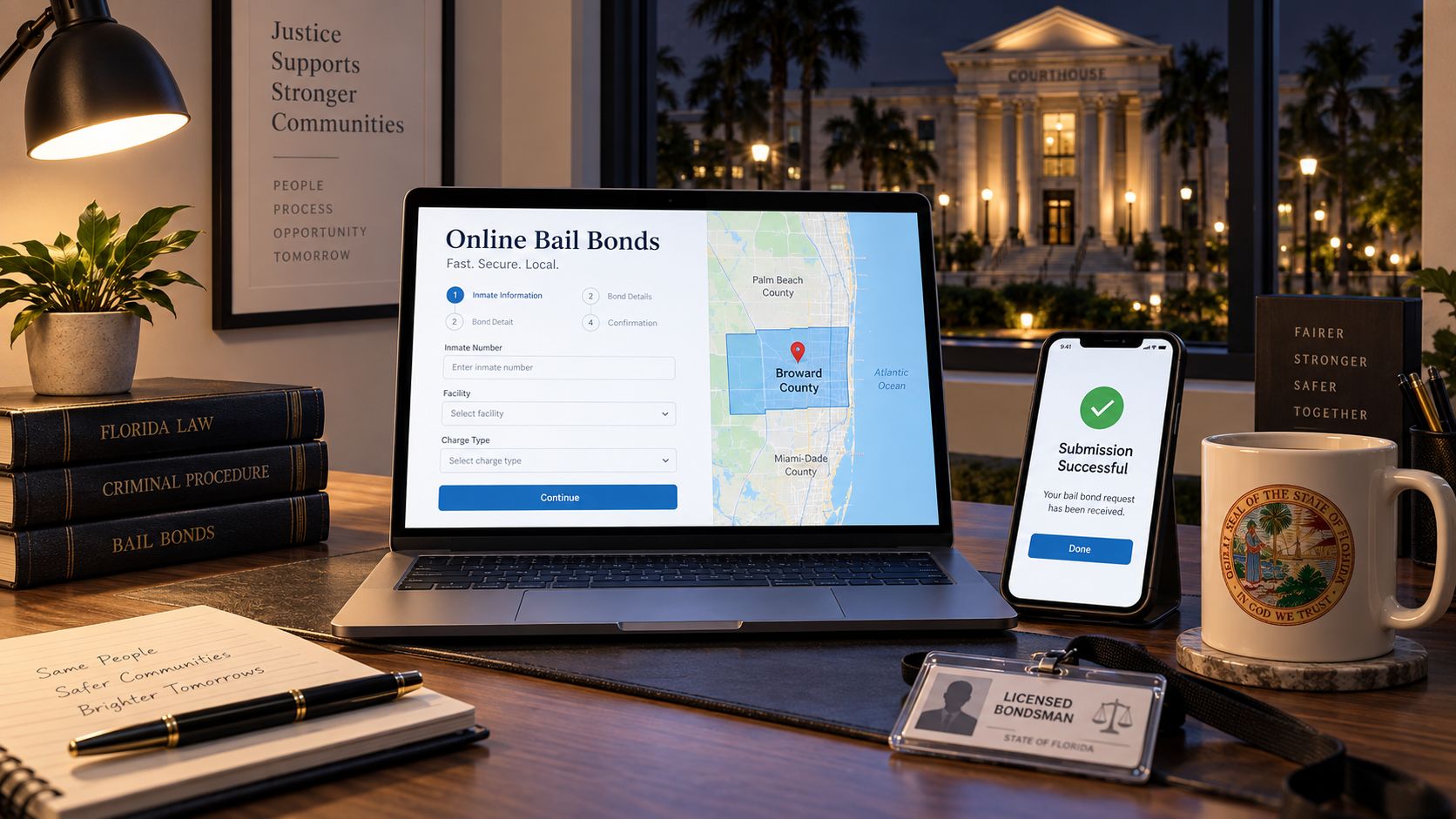
A remote intake can allow an out-of-area family member to coordinate documents and payment by phone or online forms. Blandon's online bail payment information describes remote payment channels, but the agent still needs to verify the case and complete the required agreement.
Then, authorize the card and collect documents
The cardholder may need to provide card details through the agency's approved payment process, along with identification and billing information. The indemnitor signs the bond agreement, and the payer receives the collateral receipt when collateral is paid by card.
The receipt matters because it records the transaction. Keep it with the agreement, especially if the card payment includes collateral.
Finally, the agent posts the bond
After the agreement and payment arrangements are complete, the agent submits the bond to the appropriate facility or authority. Posting the bond starts the detention facility's release procedure, but the facility controls its own processing time. Families should ask the agent what has been posted and what remains pending.
The schedule below illustrates why the agent must explain collateral-related fees before payment:
| Bond Amount Range | Credit Card Fee Example |
|---|---|
| $100.01 to $200 | $20 |
| $400.01 to $500 | $50 |
| $500.01 to $750 | $75 |
| $1,750.01 to $2,000 | $145 |
| $3,000.01 to $4,000 | $320 |
| $8,000.01 to $9,000 | $720 |
| $9,000.01 to $10,000 | $800 |
The figures come from Florida's published schedule, and they apply as examples of criminal bail-bond collateral fees, not as a universal quote for every case. The safest approach is to request an itemized total before the card is charged.
Choosing the Right Payment Option for Your Situation
The fastest payment method isn't automatically the most suitable one. A credit card can help when the cardholder has available credit and needs to authorize payment remotely, but the family should weigh the cost, refundability, documentation, and approval requirements together.
A practical comparison
| Payment option | Speed | Main financial feature | What must be confirmed |
|---|---|---|---|
| Credit card for premium | Often convenient for remote payment | Premium is generally nonrefundable | Cardholder identity, total charge, agreement |
| Credit card for collateral | May avoid an immediate cash transfer | Collateral terms and disclosed card fee apply | Receipt, posted schedule, payer acknowledgment |
| Cash or other accepted funds | Depends on access and delivery | Uses available household funds immediately | Exact amount and receipt |
| Payment arrangement | May reduce the initial burden | Requires agency approval and scheduled payments | Down payment, due dates, default terms |
| Signature bond when approved | May avoid pledged collateral | Approval depends on the case and applicant | Eligibility and indemnitor obligations |
A family using a card for the premium should remember that the premium isn't a refundable deposit. A family using a card for collateral should focus on the receipt, the fee schedule, and the conditions for returning the collateral.
Match the method to the problem
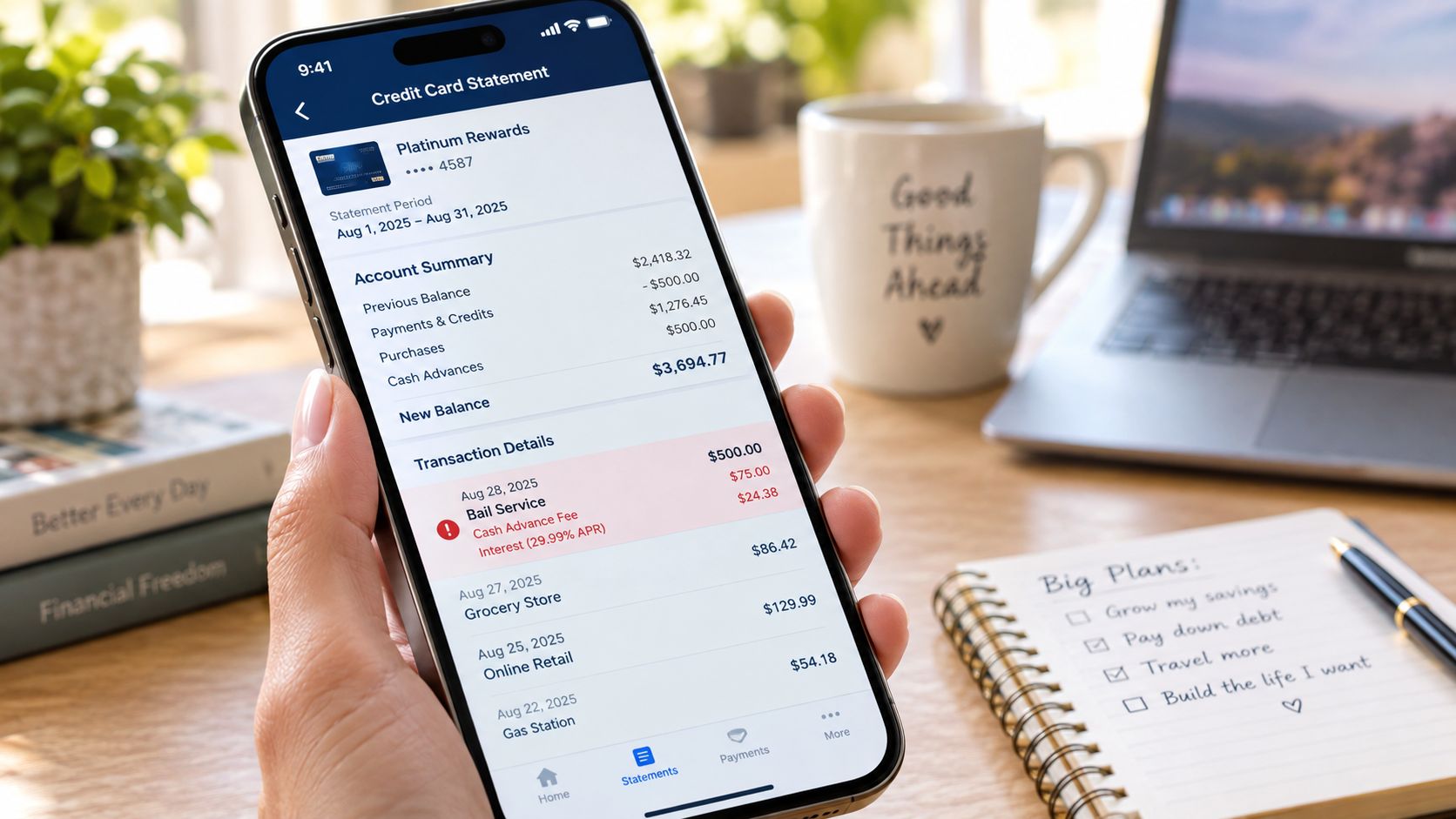
Choose the card when speed and remote access matter, and the cardholder understands the issuer's treatment of the transaction. Ask the issuer whether the payment may be classified differently from an ordinary purchase, because interest and fees depend on the card agreement.
A payment plan may fit better when the family can meet scheduled installments but shouldn't place the full amount on a card. A collateral-free signature bond may be available when the agency approves the applicant and the case meets its requirements, but approval isn't automatic.
For families comparing the mechanics of court posting and surety payment, this guide to paying a surety bond can help organize the questions to ask before signing.
The right option is the one whose responsibilities you can meet after release. Don't choose based only on whether the card goes through. Confirm the agreement, the payment schedule, and the consequences of a missed court appearance.
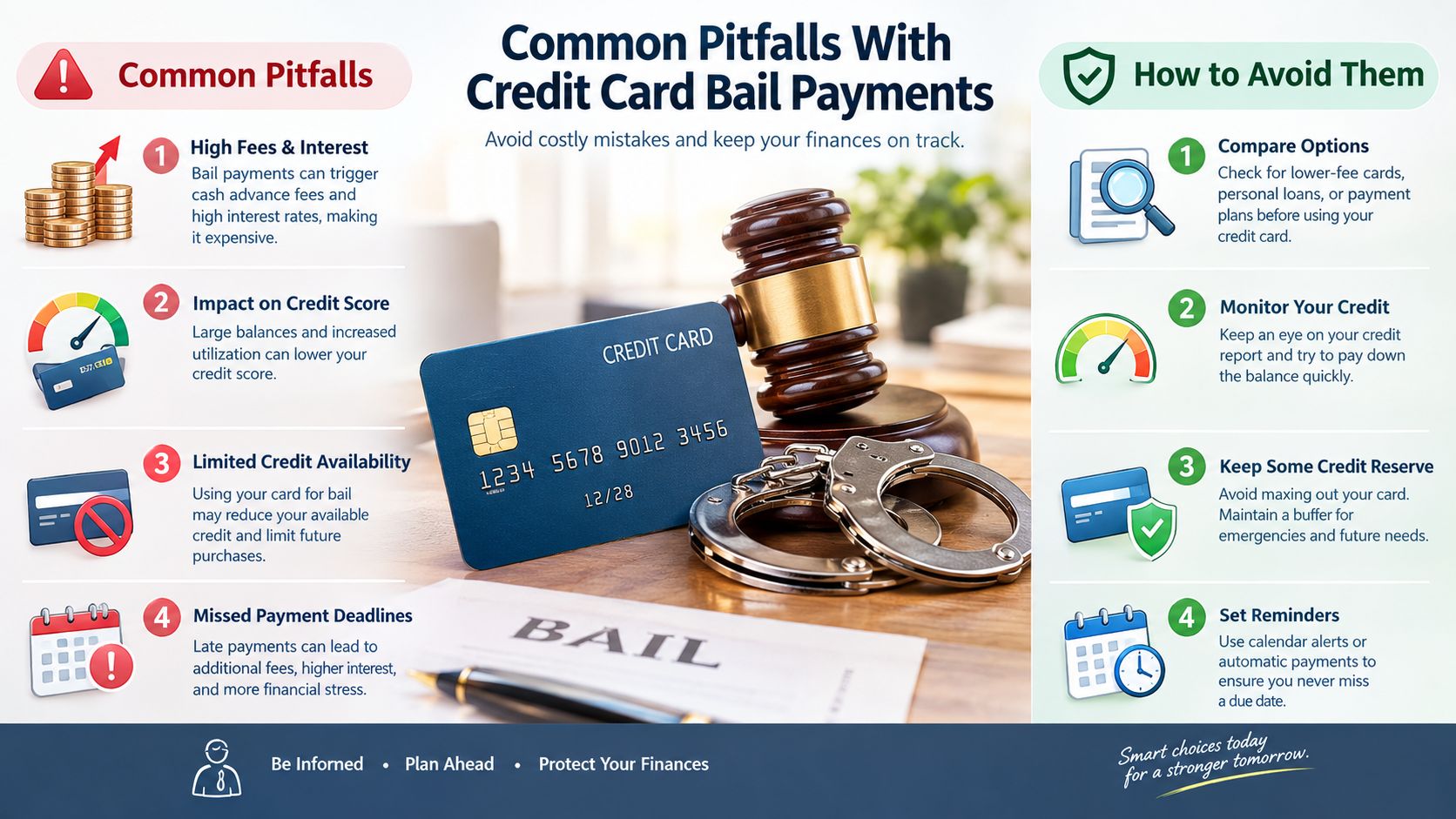
Common Pitfalls With Credit Card Bail Payments and How to Avoid Them
A card transaction can feel simple because the payment screen is familiar. Bail isn't a normal retail purchase, though. The cardholder, the indemnitor, the defendant, and the agency may each have separate responsibilities, and a mistake in one role can delay posting.
Ask the card issuer how the transaction will be treated
Some issuers may classify bail-related transactions as cash advances or apply special terms. The card agreement controls, so call the issuer before authorizing a large charge if time allows. Ask about interest treatment, available credit, transaction limits, and dispute procedures.
A chargeback also doesn't erase the bail agreement. If the defendant misses court, the indemnitor may still face the obligations stated in the bond contract. Disputing a charge because the case became difficult isn't the same as proving that the agency failed to provide the contracted service.
Third-party cards require careful authorization
A relative may be willing to pay, but the cardholder might not be the approved indemnitor. An authorized user may also lack authority under the agency's procedures to sign for the account. Ask the agent who must appear, who must sign, and what identification is required before sending payment.
Florida's collateral rule is specific because the payer needs to acknowledge the disclosed fee on the receipt. Don't assume that a card payment for a premium receives the same treatment as a card payment for collateral.
Keep a written record
Save the quote, signed agreement, card receipt, collateral receipt, and messages confirming what was posted. If the court requires proof that funds come from a legitimate source, especially in a case involving a financial review, ask the agent what documentation is needed before payment.
The safest card transaction is a documented one. Review the numbers, verify the payer, call the issuer when appropriate, and ask for clarification instead of guessing.
Next Steps to Secure Release With Blandon Bail Bonds
If a credit card is your likely payment method, prepare the information that lets the agent begin verification without repeated calls. You don't need to know every legal term. You do need accurate identifying details.
Have these items ready:
- Defendant information: Full legal name, date of birth, jail location, and booking number if available.
- Bond details: The amount set by the court and any known charge or case information.
- Cardholder information: Government-issued identification, billing details, and confirmation that the cardholder is authorized to use the account.
- Indemnitor information: The person prepared to sign the agreement and accept the court-appearance responsibility.
- Court information: Any scheduled appearance date or release condition already provided by the court.
Blandon Bail Bonds, Inc. serves South Florida families with 24/7 phone and remote intake, including cases connected to TGK Jail and other Miami-Dade facilities. The agency has an office one block from TGK, has served South Florida for more than 20 years, and handles county, state, federal, and immigration bond processes according to its published service information.
Ask for an itemized explanation before paying. Confirm whether the card is being used for the premium or collateral, whether any collateral-related fee applies, what appears on the receipt, and who must sign. Once the paperwork and payment are approved, the agent can begin the bond-posting process.
You can take the next step without making a rushed guess. Gather the booking information, identify the cardholder and indemnitor, and call for a confidential review of the available payment options.
For a Miami-Dade or TGK Jail release, Blandon Bail Bonds, Inc. offers 24/7 bail bond intake, major credit-card payment coordination, remote paperwork, and payment arrangements subject to approval. Visit the agency to request a confidential quote and confirm exactly what your card payment will cover before the bond is posted.