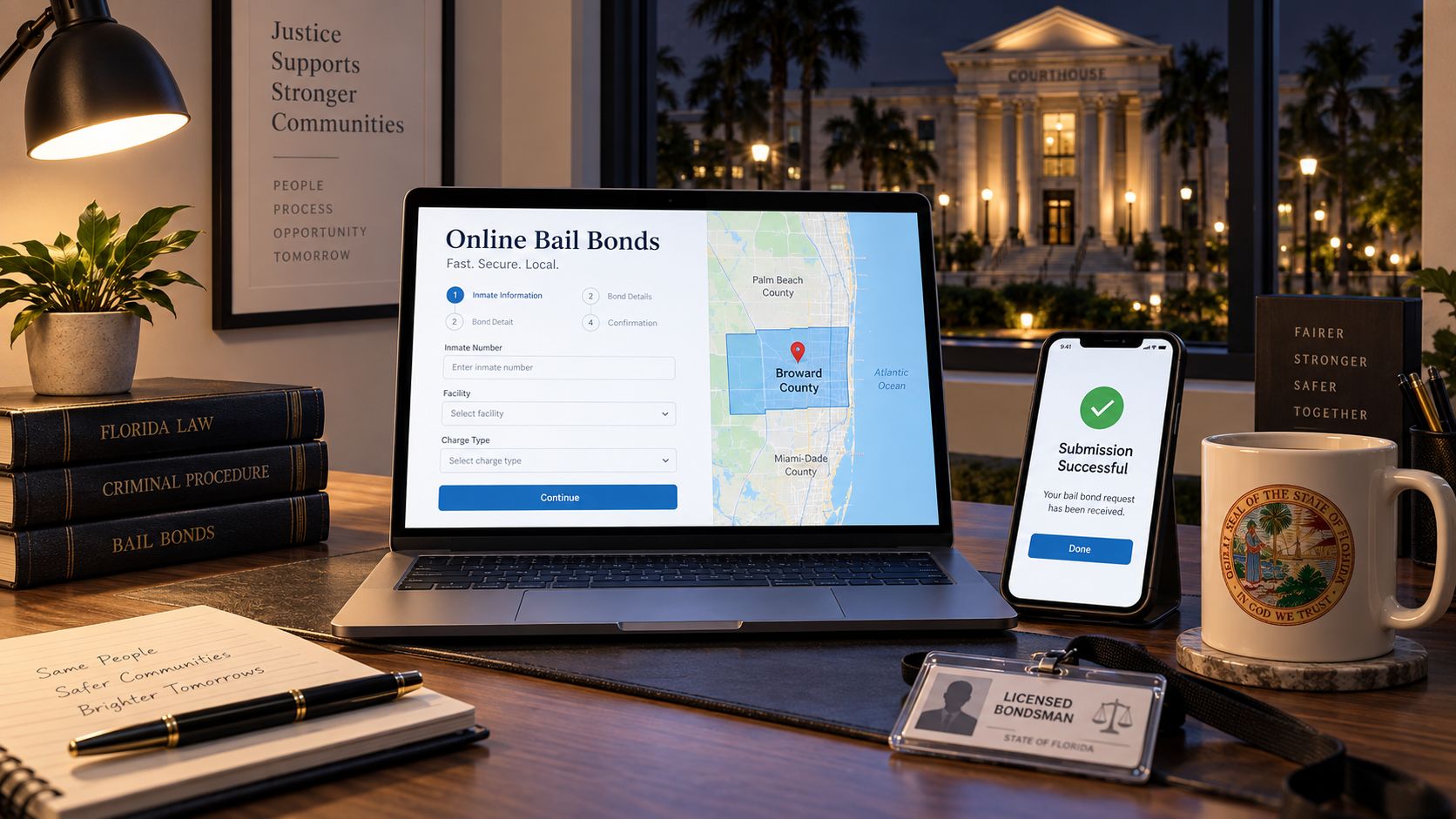
How to Pay Bail in Florida: A Practical Guide
Learn how to pay bail in Florida with clear steps for cash, credit, surety bonds, and bondsmen. Practical guidance for TGK and county jail releases.
The call usually comes when the rest of the house is asleep. A family member says someone has been arrested, the person is at Turner Guilford Knight Correctional Center, and nobody knows whether bail has been set. You have a choice to make, but guessing wastes time. Before you drive to TGK with cash or call a bondsman, confirm the booking, the charge, the bond status, and any hold attached to the arrest.
How to pay bail in Florida depends on the exact case, the facility handling the release, the payment method it accepts, and whether another agency has placed a detainer. Cash, cashier's check, money order, credit card, and a surety bond can all play different roles. The right choice is the one that fits your available funds, the urgency of the release, and the complexity of the hold.
When the Phone Rings at 2 a.m.
At 2 a.m., a Miami family may be standing in the kitchen with a phone on speaker, trying to understand what “booked at TGK” means. Their son has been processed, but the bond hasn't been set. One person wants to drive to the jail immediately. Another wants to wait until morning. Someone else is searching for a bail agent who can explain the next step without turning the call into a sales pitch.
I've walked families through this situation many times. The first hour isn't about throwing money at the problem. It's about finding out whether there's a bond to pay at all.
Florida bail isn't uniform. The amount can change with the charge, the defendant's record, the court's release conditions, and additional holds. A probation violation, parole detainer, immigration issue, or out-of-state warrant can prevent a county jail from releasing someone even after the local bond has been posted.
Practical rule: Don't leave for the jail until you know the person's booking status, the exact bond amount, and whether a separate hold exists.
A major historical pattern in U.S. bail is that cash bail creates a serious barrier to release. A Bureau of Justice Statistics-linked summary of bail data reports that 62% of adults held in pretrial detention couldn't afford to post bail. The same evidence base reports an average cash bail amount of $10,000 for non-violent offenses in 2020, up 23% from 2010, with 8% of cases set above $50,000 and 3% above $100,000 in 2022. Those figures explain why “how to pay bail” often means choosing between direct payment and commercial bail assistance, not handing over a full amount.
The four paths you'll compare are straightforward:
- Cash: Pay the full amount directly if the facility accepts it and you can safely assemble the funds.
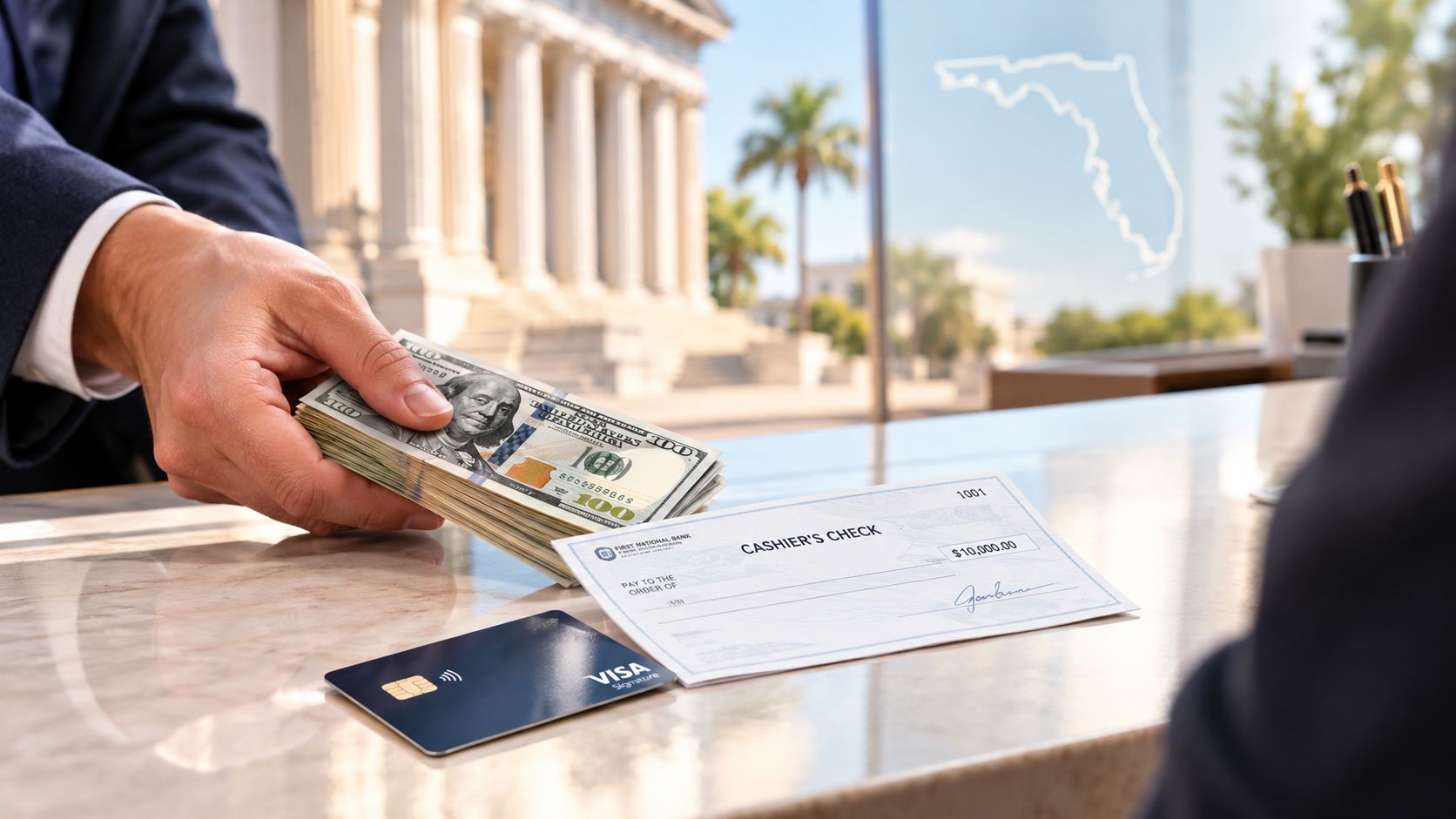
- Cashier's check or money order: Use an approved paper payment when the jail or clerk requires it.
- Credit card: Use a kiosk or counter service where that facility permits card transactions.
- Surety bond: Pay a licensed Florida bondsman's premium so the agent posts the larger bond obligation.
Get the facts first. Then choose the payment route.
What to Do in the First Hour After the Arrest
The first hour should produce a short, reliable file of information. Don't rely on a friend's description of the charge or a screenshot from social media. Confirm the arrest through the Miami-Dade Corrections inmate lookup, or the equivalent official county portal if the arrest happened elsewhere.
Search using the person's full legal name and date of birth. Check spelling carefully, especially if the defendant uses a nickname. If the record doesn't appear yet, that may mean booking is still underway, not that the arrest didn't happen.
Confirm the booking and bond status
Once you locate the record, write down the booking number, facility, listed charge, and custody status. Look for the bond amount and bond type. If the system shows no bond, don't assume a payment will solve the problem.
Ask whether the defendant has:
- A probation or parole hold: The supervising authority may need to address it.
- An out-of-state warrant: The other jurisdiction may control the next step.
- An immigration detainer: County payment may not clear federal immigration custody.
- A domestic violence condition: A no-contact order or other restriction may affect release.
- A pending first appearance: The court may need to set or modify release terms.
Call the facility's records or bond desk to verify what the online listing shows. Jail phone lines can be overwhelmed overnight, so keep notes and try again if the first call doesn't connect.
Prepare the counter packet
The person posting bail, or the indemnitor working with a bondsman, should have the defendant's full legal name and booking number. Add the case number if it's available, the exact bond amount, and government-issued photo identification.
Bring proof of address when requested. If a cardholder is paying, the cardholder may need to appear with photo ID. An official county sheriff's payment policy illustrates why families must verify the rules before traveling: accepted methods may include cash, cashier's check, money order, or major credit cards, while personal checks, split payments, and online payment may be rejected. The policy also requires the cardholder to appear with identification.
Wrong identification causes avoidable delays. A fully funded payment doesn't guarantee immediate processing if the clerk can't verify the person presenting it.
Bring the documents before the money. A payment method is useless if the jail can't accept the person making the transaction.
Paying Bail Directly at the Jail Counter
Direct payment makes sense when the family has the full amount available, the bond is uncomplicated, and the facility confirms the payment channel. Don't assume every Florida jail follows TGK's rules. A county may limit payment methods, require a particular payee, or direct you to a clerk of court rather than a jail counter.
Use the facility's instructions as the controlling authority. An official Florida court statistics resource describing deposit bonds explains the common structure in which a defendant pays approximately 10% of the full bail amount to the court for a deposit bond. That isn't the same as a universal Florida payment rule, so confirm the bond type before calculating what you need.
Direct Bail Payment Methods at Florida Jail Counters
| Payment Method | Accepted Locations | Typical Turnaround | What to Bring |
|---|---|---|---|
| Cash | Facilities that confirm cash acceptance, including many county counters | Can begin processing once the amount and documents are verified | Exact amount when possible, government photo ID, booking details |
| Cashier's check | Facilities or clerks that accept approved checks | Depends on verification and banking or clerk procedures | Correct payee, government photo ID, booking and case information |
| Money order | Facilities or clerks that accept approved money orders | Depends on verification and office procedure | Correct payee, receipt, government photo ID, booking details |
| Credit card | Jails with an approved kiosk or counter service | Subject to card authorization, fees, and facility processing | Cardholder, photo ID, available credit, booking information |
Cash is direct, but it creates the greatest practical risk when the amount is large. Ask the jail whether it requires exact payment or has restrictions on denominations. Never assume a clerk can break a large bill or accept a partial amount.
A cashier's check can be cleaner for a substantial payment, but the payee must be correct. A money order may work through an approved provider, but make it payable to the Clerk of Court or the specified county sheriff's office, never to the inmate. Keep the receipt until the case and payment record are resolved.
Credit card payment can be convenient, but a convenience fee increases the effective cost. Before authorizing the transaction, ask whether the fee is refundable, whether the cardholder must appear, and whether the kiosk or counter is operating.
For a broader explanation of why online payment assumptions can cause delays, review this guide to whether bail can be paid online. Federal holds and immigration detainers require separate action, so a county counter may be unable to complete the release even after local bail is paid.
When a Surety Bond Through a Bondsman Makes Sense
A surety bond is usually the practical choice when the bail amount would drain the family's savings, the release is urgent, or the person posting bail lives outside Florida. The bondsman posts the required bond, while the indemnitor pays the premium and accepts the contractual obligations attached to the agreement.
Florida's common premium model is approximately 10% of the bond amount, subject to applicable statutory limits and fees. For a $25,000 bond, that means the upfront premium may be roughly $2,500, rather than tying up the entire bond amount. The premium is generally nonrefundable, so ask for the total cost and payment terms before signing.
When to Use a Surety Bail Bond
| Factor | Direct Bail | Surety Bond |
|---|---|---|
| Upfront funds | Requires the approved direct payment amount | Requires the premium and any agreed costs |
| Cash availability | Ties up the full direct payment or deposit | Preserves more of the family's available cash |
| Speed | Depends on the facility and payment verification | Agent can coordinate paperwork and posting |
| Out-of-state family | May require travel or a local representative | Remote intake may reduce the need to travel |
| Collateral | Not usually part of direct payment | May be required depending on approval and risk |
| Responsibility | Defendant remains responsible for release conditions | Indemnitor also accepts contractual responsibility |
Collateral isn't automatic. A signature bond may rely on the signer's promise and financial standing. A collateral bond may involve a vehicle title, deed of trust, or another accepted asset. Never pledge property without receiving written terms explaining how and when it can be released.
Don't choose an agent by advertised percentage alone. Ask who will process the paperwork, what documents are required, whether payment arrangements are available, and what release timing is realistic.
A surety bond doesn't erase the defendant's court obligations. The defendant must appear, follow release conditions, and communicate promptly about any change that could affect compliance. For a practical explanation of the surety process, see this guide to paying a surety bond.

Working With a Florida Bail Bondsman
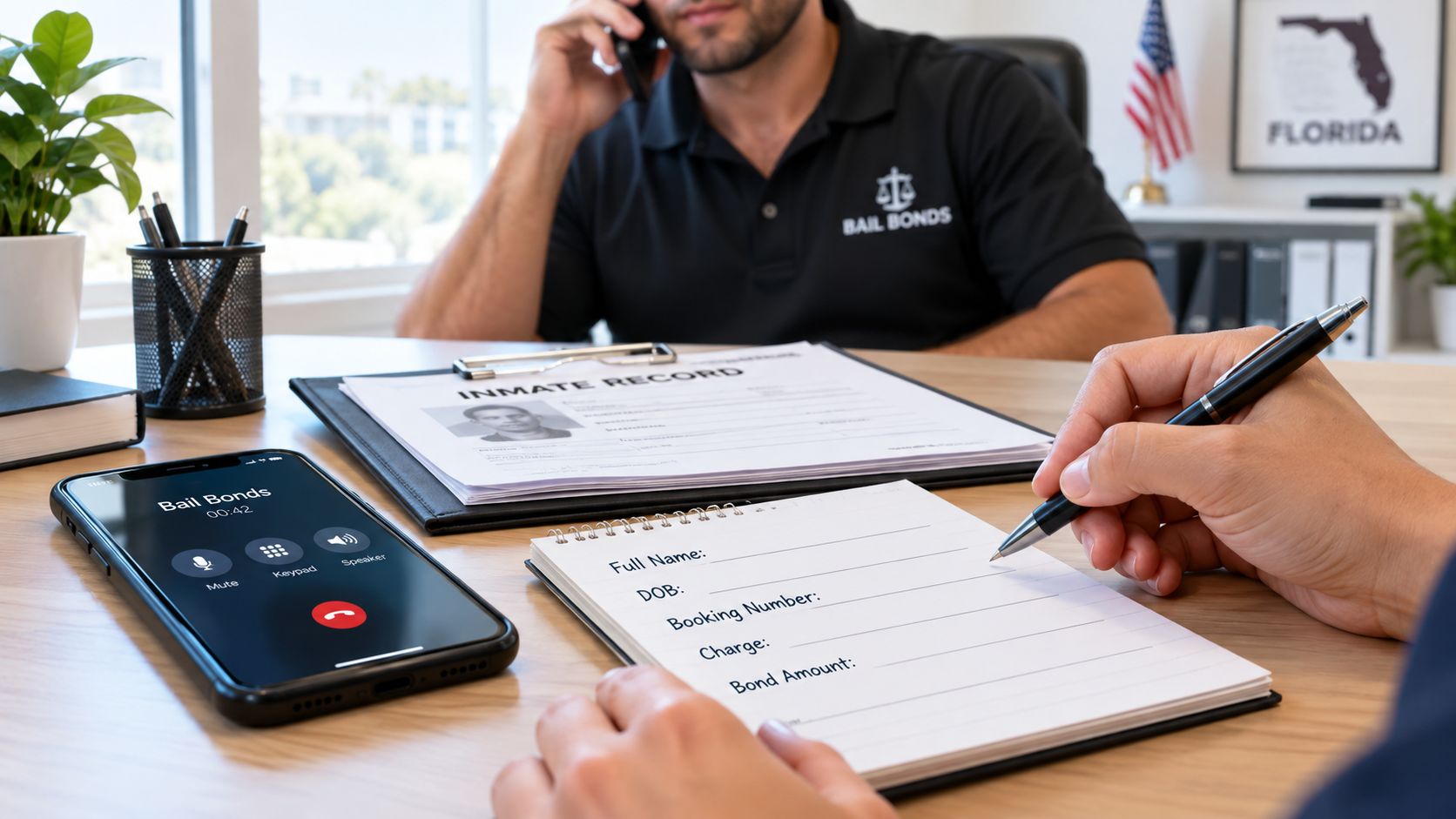
A good bond application starts with accurate information, not a long story. Give the agent the defendant's full legal name, date of birth, booking number, charge, bond amount, and holding facility. If the amount came from a friend or an unofficial message, confirm it directly with the jail before accepting a quote.
The bondsman will verify the custody information, explain the premium, and prepare the indemnity agreement. That agreement gives the agent authority to arrange the bond and identifies the obligations of the signer. A power of attorney is commonly included in the paperwork, but it doesn't let the bondsman control the defendant's criminal case or act as the defendant's lawyer in court.
Read the agreement before signing
Focus on the terms that create financial responsibility:
- Payment schedule: Confirm the due dates, accepted payment channels, and consequences of a missed installment.
- Renewal language: Ask what happens if the case remains open or the bond must continue.
- Collateral terms: Identify the property pledged, its value, and the conditions for release.
- Cancellation provisions: Understand what happens if the defendant returns to custody or the bond is surrendered.
- Failure to appear: Ask how a missed court date affects the indemnitor and any collateral.
A signature bond generally requires the defendant, and often an indemnitor, to sign. The indemnitor may become responsible if the defendant fails to appear. A collateral bond can require proof of ownership, title documents, property records, or other supporting paperwork.
Keep a complete paper trail
Ask whether collateral will be returned or released after the bond is discharged, and request the answer in writing. Never hand over cash, transfer property, or send funds without a receipt showing the amount, date, purpose, and recipient.
Keep copies of the signed agreement, payment confirmations, collateral documents, and release confirmation. If the family member is out of state, confirm that all required signers can complete the documents remotely and remain reachable for verification.
Differences Between TGK and Other Florida Jails
TGK uses Miami-Dade's booking and release procedures, so do not assume another Florida jail follows the same steps. Payment channels, records procedures, staffing schedules, kiosks, and release checks can differ by county.
Before traveling, verify the person through the Miami-Dade Corrections inmate lookup, then contact TGK to confirm the bond amount, accepted payment method, and current release instructions. Ask which identification the payer needs and whether the receiving person must appear in person. For a fuller walkthrough of the facility's release steps, see this TGK jail release guide.
TGK and Other Florida Jail Workflows
| Issue | TGK / Miami-Dade | Other Florida County Jails |
|---|---|---|
| Booking confirmation | Use Miami-Dade's inmate information system and verify with the facility | Use the county's official inmate portal and records contact |
| Payment channel | Confirm whether the counter or kiosk accepts the selected method | Rules vary by sheriff, jail, clerk, and local vendor |
| Documents | Government identification and accurate booking information may be required | Requirements can differ by county and bond type |
| Overnight processing | South Florida services may operate around the clock, but release still depends on checks | Staffing and office schedules may slow weekend or overnight processing |
| Release timing | Depends on booking completion, bond clearance, medical review, and holds | Magistrate schedules, banking cutoffs, distance, and staffing may add delays |
A smaller county jail may have fewer overnight staff or limited access to court and banking systems. Payment can be complete while the file waits for a clerk, supervisor, or release unit.
Bond clearance does not guarantee immediate discharge. The jail may still complete identity checks, medical screening, property procedures, and release review. A detainer from another agency can delay release even after the local bond is satisfied.
Ask for a realistic range, not a guaranteed release time. Anyone promising an exact hour without checking the jail's current queue is guessing.
For an out-of-state relative, a local bondsman often reduces travel and paperwork problems. The agent still needs complete booking information, reliable contact details, and reachable indemnitors. Confirm the jail's current instructions before anyone sends money or drives to the facility.
After the Bond Is Posted
Release is not the end of the case. It's the point where the defendant leaves custody and becomes responsible for following the court's instructions outside the jail.
Before leaving, the defendant should receive paperwork identifying the next court event and the conditions of release. That paperwork may include the arraignment date, written supervision terms, a no-contact order, travel restrictions, testing requirements, or other conditions tied to the case. Read every page before putting it in a pocket or glove compartment.
Build a compliance system immediately
Do these tasks while the information is still fresh:
- Photograph the paperwork: Save clear copies in a secure phone folder and send them to a trusted family member.
- Enter every hearing: Put each court date and arrival time into more than one calendar.
- Store contact information: Keep the bondsman's number available, especially if the agreement imposes reporting or communication requirements.
- Report address changes: Ask the clerk of court or supervising authority how to update the defendant's address.
- Respect no-contact orders: Don't treat a private text, family request, or social media message as permission to communicate.
A missed court appearance can lead to a bench warrant, bond forfeiture, and additional legal trouble. If the defendant has an emergency, the family should contact the defense attorney and bondsman promptly rather than waiting for the missed date to become a larger problem.
Understand what happens to the bond
A bond may be exonerated when the court or surety's obligation ends under the applicable procedure. That doesn't mean every financial item disappears immediately. Premiums, payment agreements, collateral, and forfeiture issues are governed by the written contract and the court's records.
New York research shows why the ability to post bail matters beyond the payment mechanics. From 2019 to 2024, the share of people who could post bail fell from 21% to 9% at arraignment and from 36% to 19% within five days, while median cash bail rose sharply, according to the Data Collaborative for Justice pretrial decision-making summary. The lesson applies broadly: a higher amount can turn an available release option into detention when the family cannot assemble the required funds.
Some jurisdictions also distinguish between partially secured and unsecured bonds. A later Data Collaborative for Justice summary describes partially secured bonds as requiring upfront payment of 10% or less, while unsecured bonds require no upfront payment. An unsecured bond still carries the full financial obligation if conditions are violated, so “no money upfront” doesn't mean “no responsibility.”
Choose the payment method by asking three questions: How much liquidity is available, how quickly does release matter, and are there additional holds or complicated conditions? Direct payment fits available funds and a clean workflow. A surety bond fits high bail, urgent release, or an out-of-state family. Whatever you choose, treat the bond as an obligation, not a purchase.
Blandon Bail Bonds, Inc. provides around-the-clock assistance with TGK and Miami-Dade releases, surety bonds, payment arrangements, and paperwork coordination for local and out-of-state families. If someone you know has been arrested, visit Blandon Bail Bonds, Inc. to request guidance and start the bond process with the booking information ready.