How Does Bondsman Work for Florida Families
How does bondsman work in Florida? See 10% state and 15% federal premiums, collateral, the 60-day forfeiture clock, and release steps.

It's late, your phone rings from a number you don't recognize, and someone you love tells you they've been booked at Turner Guilford Knight, or TGK, in Miami-Dade. You hear a bail amount you can't pay in cash, a court date you don't want them to miss, and a word you're now searching in a hurry: how does bondsman work?
You're not looking for legal theory. You're trying to answer three practical questions before you pay anyone. What does the bondsman guarantee, what part of the money comes back, and why might your relative still be in custody even after you've paid?
Those answers are calmer than the first phone call suggests, but they're specific. A bondsman doesn't set bail, doesn't decide guilt, and doesn't make the criminal case disappear. He posts a financial promise to the court so release can happen without your family posting the full bail amount in cash.
What a Bondsman Guarantees and What You Pay
A commercial bail bondsman is a licensed surety. That means he guarantees to the court that the defendant will appear as required and follow release conditions. If the defendant appears and satisfies those conditions, the surety obligation ends.
If the defendant doesn't appear, the bondsman may become responsible for the guaranteed amount and may seek the defendant's return or use collateral under the agreement. That's the risk you're paying him to take.
Who Decides What
The judge sets bail. The bondsman doesn't choose that number, and he doesn't decide whether the charge is true. His job starts after the court sets a financial condition for release.
Instead of paying the entire court-set amount, the defendant or family typically pays a nonrefundable premium while the bondsman guarantees the full amount to the court, a model described in the Center for American Progress fact sheet on commercial bail, which notes commercial surety bonds represented 49% of pretrial releases in 2009, while recognizance releases had fallen to 23%.
Paying a bondsman buys a private guarantee of appearance. It doesn't buy a dismissal, a lower charge, or permission to skip court.
Five Ways to Meet Bail
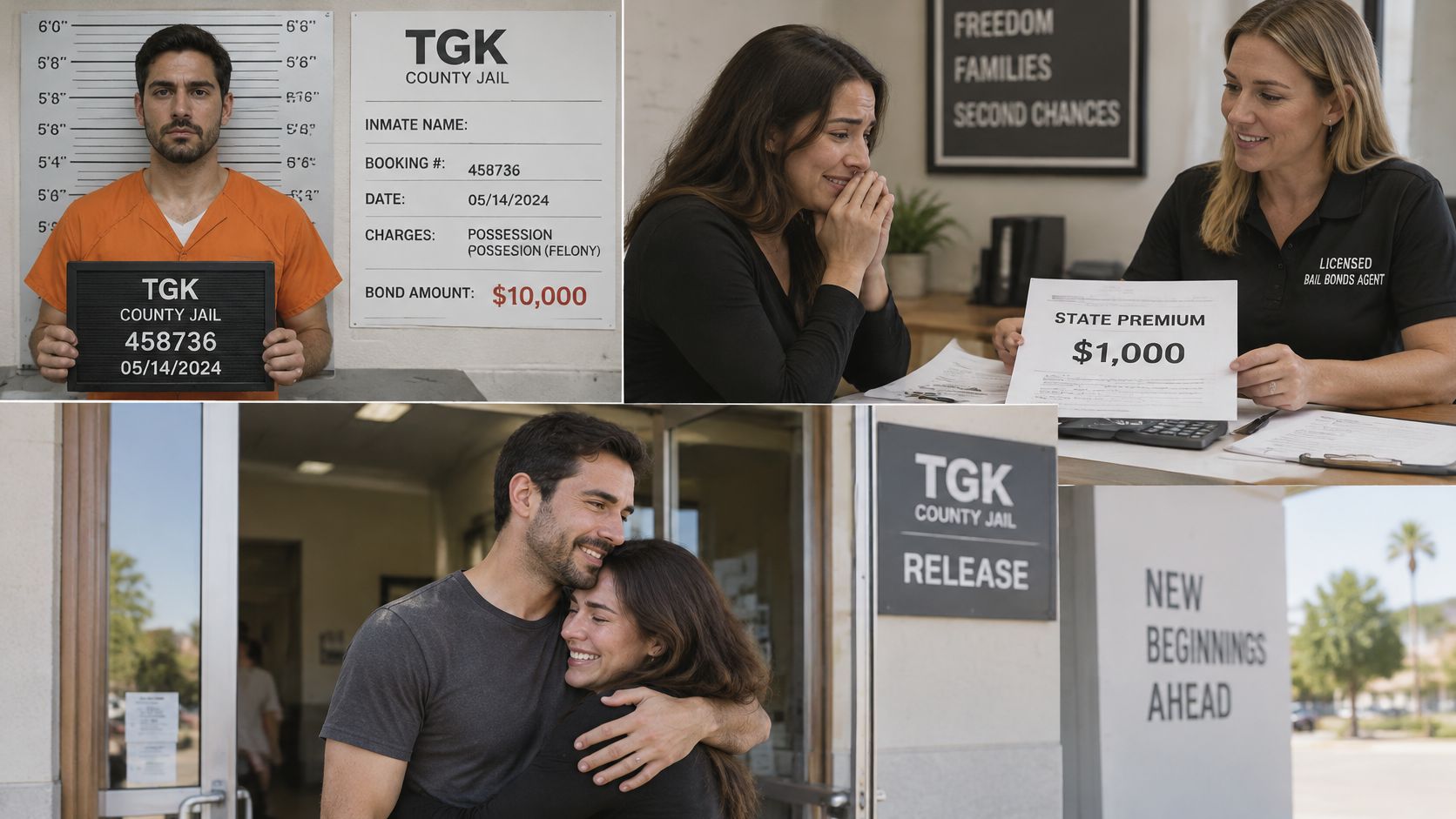
Say bail is set at $10,000. With cash bail, your family hands the court the full $10,000. With a state surety bond, you pay a premium of about $1,000 to the agent and insurer, and they guarantee the $10,000 to the court. The first is largely a deposit. The second is a fee for taking on risk.
Ways to Meet Bail and What the Family Pays
| Release path | Who covers the court | What the family pays | Comes back? |
|---|---|---|---|
| Cash bail | Defendant or family pays the full bail to the court | Full bail amount, such as $10,000 | Often yes if conditions are met |
| State surety bond | Licensed agent and insurer guarantee the full amount | About 10% premium, such as $1,000 on $10,000 | Premium no; collateral may be returned if the contract is satisfied |
| Federal surety bond | Licensed agent and insurer guarantee the full amount | About 15% premium | Premium generally no once released |
| Release on recognizance | No financial surety | Nothing posted | Not applicable |
| Deposit or collateral bond | Court holds a deposit or property | Deposit or pledged property | Often yes if the defendant appears |
Read the table by asking two questions about every dollar. Who is covering the court if something goes wrong, and is the money you hand over a deposit or a fee? Most confusion starts when families treat a surety premium as if it were cash bail held by the court.
It isn't. Once you keep those piles separate, the next question makes sense. Why would an agent agree to guarantee $10,000 for your family, and what does he check first?
How the Bondsman Underwrites the Bond
Think of underwriting the way you'd think of cosigning a loan. The court has already sized the obligation by setting bail. The bondsman, acting for an insurer, decides whether he's willing to put that insurer on the hook for the full amount.
He isn't guessing. He's checking whether the defendant is likely to appear, whether anyone responsible will help make that happen, and whether there's a separate reason the person won't be released at all.
What the Agent Reviews
Expect questions in roughly this order. The point isn't curiosity. Each answer changes the insurer's exposure.
- The charge and bail amount: This tells the agent the size of the guarantee and the seriousness of the case the court is managing.
- Criminal history and past appearances: A record of showing up matters more than promises made during a stressful phone call.
- Local ties in the county of arrest: A home address, family nearby, and time in the community suggest the defendant has a reason and a way to return to court.
- Employment and stability: Work doesn't guarantee appearance, but it helps show routine and reachable contact information.
- Another warrant or hold: A second authority can keep someone in custody even after this bond is posted.
- A responsible indemnitor: The agent needs to know who is standing behind the agreement if the defendant doesn't comply.
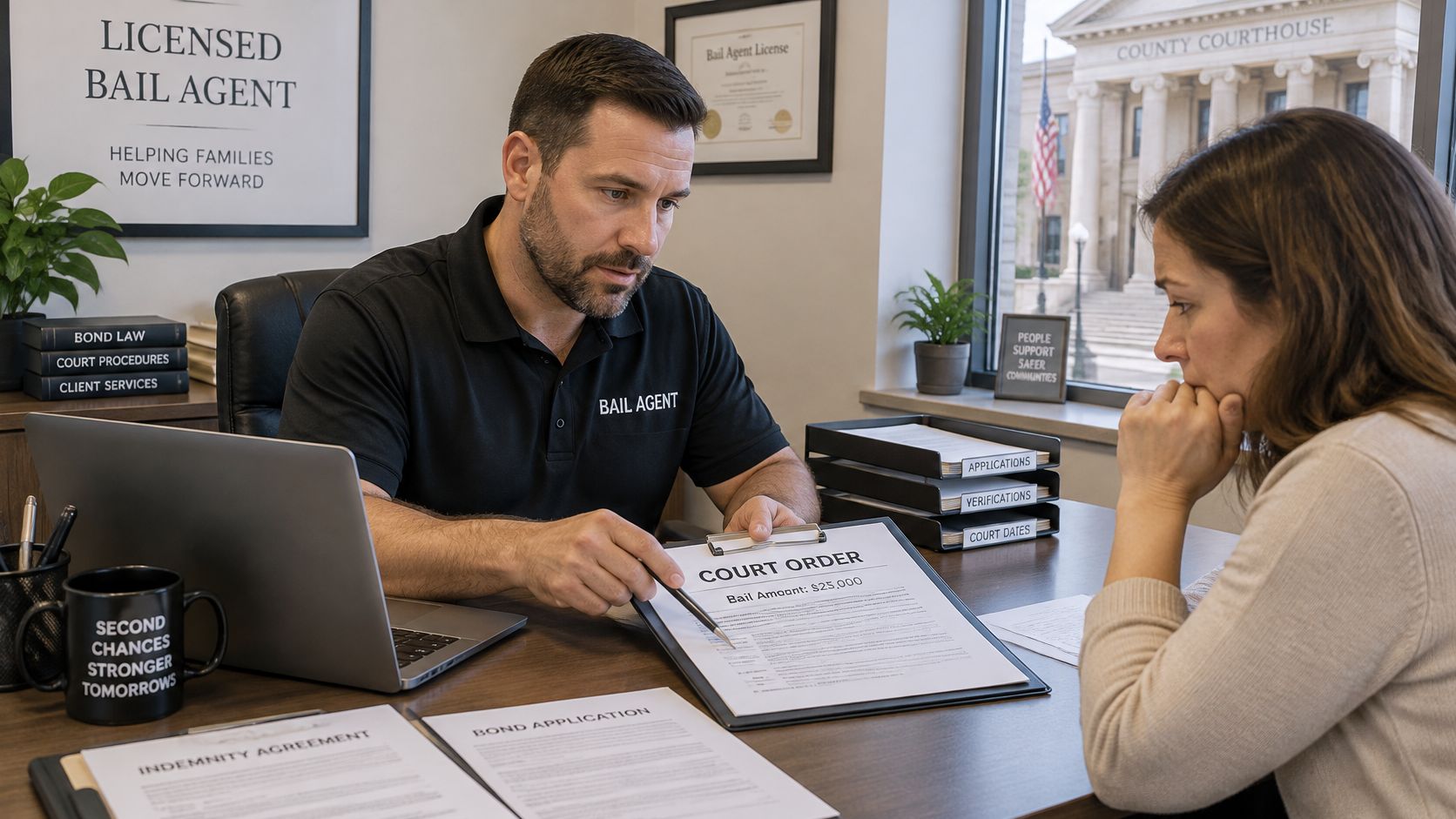
That last person matters more than many families realize. An indemnitor, usually a relative or friend, pays the bail bond fee and signs the bond agreement. By signing, that person promises to cover the company's loss under the contract if the defendant fails to comply. You're not just helping with a payment. You're accepting real financial risk.
Understanding that risk also helps you understand Florida's wider release options, including pretrial release in Florida, where nonfinancial conditions may apply instead of, or alongside, a bond.
Why a Discount Premium Is a Warning
Florida doesn't let agents price this risk however they like. Under Florida Statutes section 648.33, a bail bond agent may not execute a bond without charging a premium, and the applicable rate must be filed with and approved by the state insurance regulator, so the agent cannot freely charge either more or less than the approved rate.
That rule protects you in a practical way. A quote far below the filed rate isn't a bargain you found at midnight. It suggests the person quoting it is operating outside the regulated system, which leaves you with less protection when paperwork, collateral, or a missed court date becomes a dispute.
Approval is still case by case. Two defendants with the same bail amount can get different answers because their histories, ties, holds, and indemnitors are different. The premium rate is regulated, but the decision to take the risk is not automatic.
Premiums Collateral and Payment Plans in Florida
Start with the two rates families ask about most. The Florida Department of Financial Services consumer guidance on bail bonds identifies a 10% premium for a state bond and 15% for a federal bond, and states that the premium is generally earned and nonrefundable once the defendant is taken out of jail.
That means release itself is the service you paid for. Even if the case later ends well, the premium doesn't come back the way cash bail might.
Work the Math Before You Sign
Say state bail is $5,000. The premium is $500. On $10,000 in bail, it's $1,000, and on $20,000, it's $2,000. A federal example looks different: say a federal bond is $50,000, the premium at the federal rate is $7,500.
Use this table to label each cost before money changes hands. If you want a broader cost breakdown first, review how much bail costs and then match your quote line by line.
Florida Bond Costs Families Can Look Up
| Cost item | Typical amount | Who keeps it | Rule to remember |
|---|---|---|---|
| State bond premium | 10% of the bail | Agent and insurer | Generally earned and nonrefundable once released |
| Federal bond premium | 15% of the bail | Agent and insurer | Generally earned and nonrefundable once released |
| $5,000 state bail | $500 premium | Agent and insurer | Family does not post the full $5,000 |
| $10,000 state bail | $1,000 premium | Agent and insurer | Premium is not a refundable court deposit |
| Collateral | Cash, vehicle, property, or none | Returned only if the contract is satisfied | Separate from the premium; list every item |
| Signature bond | No upfront collateral if approved | No collateral held at signing | Case-by-case, with limitations, not a rate cut |
Collateral Is a Separate Pile
Collateral is security beyond the premium. It might be cash, a vehicle, or property, and it protects the insurer if the bond is forfeited or release conditions are broken. It's aimed at return only when the bond is exonerated and the contract is satisfied.
Don't hand over collateral on a handshake. Every item should be listed in writing, with its value, who owns it, and what has to happen for it to be released.
Before you sign: Label every dollar and every item as premium, collateral, or a separate fee. If you can't label it, don't pay it yet.
Signature Bonds and Payment Plans
A signature bond means the bond may be issued without upfront collateral if the case is approved. We assess each case to decide whether to issue a bond without collateral upfront, known as a Signature Bond, which may be approved in certain cases with limitations. It isn't a lower legal rate, and it isn't available for every charge or history.
A payment plan works differently. It can spread the premium over time, including by major card where the agent accepts it, but it can't cut the filed rate and it doesn't make the premium refundable. You're financing the same regulated charge, not negotiating it down.
Before anyone signs, verify the agent is licensed and appointed, get a written receipt and contract, document every collateral item, and ask whether transfer, filing, or tax charges sit on top of the premium. Clear paperwork now prevents the hardest arguments later.
What Happens If a Court Date Is Missed
One missed appearance triggers a whole sequence. The court declares the bond forfeited, the insurer becomes liable for the full bail amount, and the surety starts looking for the defendant or for the collateral and indemnity backing the bond. The premium already paid buys none of that back.
That is the line families need to see clearly. The premium paid for the promise to appear, and when that promise breaks, an entirely different set of clocks starts running.
Florida's process is set out in Florida Statutes section 903.26 on bond forfeiture, which provides that a failure to appear causes the court to declare the bond and deposited bail forfeited, the clerk must notify the surety agent and insurer within 5 days, and the forfeiture generally must be paid within 60 days after notice.
Read the Clock Like a Family Member
Florida Forfeiture Clock After a Missed Appearance
| Event | Clock | What to do |
|---|---|---|
| Required appearance missed | Immediate | Call the bondsman and the defense lawyer |
| Clerk notice to surety and insurer | Within 5 days | Confirm the notice and the bond paperwork |
| Forfeiture generally due | Within 60 days after notice | Expect the surety to pay and look to indemnity or collateral |
| Bond discharged | Before judgment, if statutory steps are met | Defendant arrested and returned, or a new bond posted |
| Surety kept informed of upcoming dates | Ahead of each hearing | Keep the address and phone number on file current so every notice reaches you |
The first call matters most. Waiting to see whether the court forgets, or assuming a new date will be mailed to the right address, turns a fixable miss into a paid forfeiture. Call the bondsman and the defense lawyer immediately, explain what happened, and ask what can still be done before judgment.
There is a path back in some cases. The exposure can be discharged if the defendant is arrested and returned to the jurisdiction or posts a new bond before judgment, following the statutory procedure. That path runs through the court on firm deadlines, and no bondsman can waive them as a favor.
Duties That Sit Outside the Premium
Release comes with ongoing responsibilities that have nothing to do with money. Keep the bond paperwork current, confirm every hearing directly with counsel or the clerk, and notify the bondsman right away about a new address, phone number, immigration issue, or new custody. Stale contact information is how ordinary cases turn into forfeitures.
- Confirm dates yourself: A text, a relative's memory, or a date heard during a chaotic release is a weak substitute for checking with the clerk.
- Report changes fast: A move across town matters when court or surety notices go to the old address.
- Treat conditions as court orders: Travel limits, no-contact terms, and reporting duties carry the same weight as any order from the judge.
Release also leaves the criminal case fully in place. Florida bail exists both to secure appearance and to protect the community, so the amount paid is only one part of the court's release decision. The defendant still needs a defense and still has to appear until the court says otherwise.
Remember two numbers from this section: the clerk's notice window and the payment window that follows it. Those two clocks explain why a bondsman reacts so urgently the moment a court date is missed.
Release Steps and the Still-in-Custody Checklist
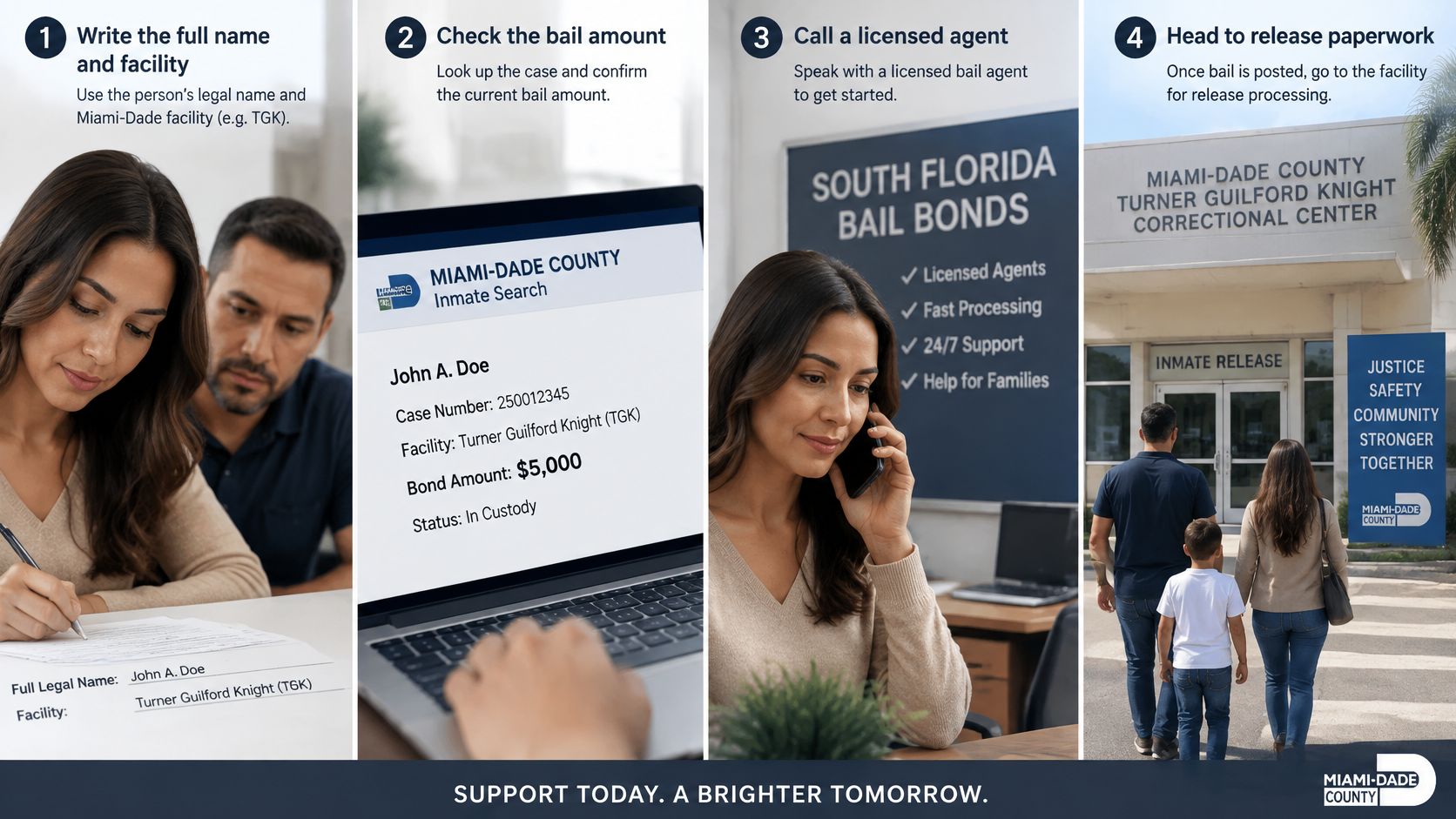
Most South Florida releases follow the same six steps. Knowing the order helps you tell the difference between a normal wait and a real problem.
Six Steps From Booking to Release
- Get the full legal name and facility: Confirm whether the person is at TGK or another Miami-Dade jail. A nickname or misspelled name can slow the lookup.
- Confirm bail and conditions: Ask for the bail amount, whether a surety bond is allowed, and any conditions the judge added.
- Call a licensed bondsman with that name: The agent looks up the booking, checks for obvious holds, and quotes the premium.
- Sign, pay, and deliver collateral if required: The indemnitor signs the agreement, pays the premium, and provides any collateral the approval requires.
- The agent posts the bond: The bond goes to the court or jail so the financial condition is satisfied.
- Wait through release processing: Booking, fingerprints, classification, and release paperwork still have to be completed by the facility.
If you have the necessary paperwork, money, and collateral for the bond, the person can be released within hours after signing the bonding documents. That's a real possibility, not a promise that the door opens the minute you pay. Families arranging release from outside the county, including through Broward online bail bonds, should still plan for facility processing after posting.
If They're Still in Custody After You Paid
Don't start by assuming the bondsman took your money and did nothing. Check in this order, because each item points to a different office that can fix it.
- Was the bond accepted: Ask the agent for confirmation that the bond was posted and accepted for the correct booking and charge.
- Is there another hold: Ask whether another county, agency, or immigration authority has placed a hold that must be resolved separately.
- Is booking finished: Verify fingerprints and booking are complete, since release processing usually can't finish before intake does.
- What's the next court date: Get the date, time, courthouse, and case number before the person walks out.
- Do supervision or travel rules apply: Ask whether pretrial supervision, reporting, monitoring, or travel restrictions are part of release.
Posting money satisfies a financial condition. It doesn't cancel another agency's hold or finish the jail's own processing.
That distinction is built into Florida's system. Under Florida Statutes section 903.011 on pretrial release, Florida requires an annual statewide bond schedule for many offenses eligible for release before first appearance, but offenses excluded from that schedule, judicial findings, holds, and special conditions can change the process.
So ask about holds early, ideally before you sign. If a hold exists, the bond may still be necessary for the first case, but it won't be sufficient to bring your relative home that night.
A Florida Release Told in Dollars and Hours
Say a brother is booked at TGK on a state charge and bail is set at $10,000. His sister has some savings, but she can't raise $10,000 in cash without missing rent and emptying the account she uses for work.
She calls a licensed agent with his full name. The agent finds the booking, confirms there's no obvious second hold, and quotes a premium of $1,000. He also tells her plainly that the premium is generally nonrefundable once her brother is released.
The Straightforward Outcome
The agent asks where her brother lives, who he lives with, whether he works, and whether he has missed court before. His ties are local, and his sister is willing to sign as indemnitor. After that review, the agency approves a signature bond with no upfront collateral and stated limitations.
She signs the indemnity papers, pays the premium, and keeps copies of everything. The agent posts the bond, the jail completes release processing, and her brother is out within hours.
He is home, but he isn't done. He still has to appear in court, follow every condition, and keep his phone and address current with both his lawyer and the bond office. If he misses court, the full $10,000 can be forfeited, and his sister's indemnity agreement is what the company pursues. Her signature was the reason collateral wasn't required upfront, and it's also the reason she can't treat the court dates casually.
The Same Payment With a Different Result
Now change one fact. She pays the same $1,000, the agent posts the same bond, and her brother still doesn't come out. This time, the booking carries an immigration hold or an out-of-county warrant.
The premium didn't fail. It satisfied the bail condition on the Miami-Dade case. Another authority is independently requiring custody, and that authority has to be dealt with through its own process.
That's why the useful question isn't only, "Did the bond post?" It's, "Is anything else holding him?" Ask it before you pay, and ask it again if release doesn't happen when you expected.
A federal version of this story changes the math, not the logic. Say the same family faces a $50,000 federal bond. At the federal premium rate, they'd be quoted $7,500, generally nonrefundable after release. The guarantee, the indemnitor's risk, and the duty to appear would work the same way.
Match your own paperwork to one of these paths. If you can't point to the premium, the indemnitor, any collateral, and the next court date on your copies, call the agent and get those four items clarified before the first hearing.
Call a Licensed Bondsman Before You Pay
One check comes first. The agent should be licensed in South Florida, willing to show you that license, ready to hand you a written contract, and able to match the quote to the filed premium for a state or federal bond.
Walk away from an offer below the legal rate. Walk away just as fast from anyone who won't put the premium, collateral, and indemnitor duties in writing. Urgency is real after an arrest. It is still not a reason to accept paperwork you can't verify.
A signature bond adds one more question worth asking on the phone. Each case gets assessed for risk, and a bond without upfront collateral may be approved in certain cases with limitations, so ask early whether yours qualifies instead of assuming you'll need property.
What to Have Ready When You Call
Step 1 of the bail process is to contact Blandon Bail Bonds, either by talking to the team or scheduling a free consultation. Have four facts ready so the lookup and quote are accurate.
- Full legal name: After you provide the defendant's name, we find the necessary information on the defendant and give a free quote.
- Facility: Say whether the person is at TGK or another jail in Miami-Dade, Broward, Palm Beach, or Monroe.
- Any known hold: Mention another county, a warrant, probation, or immigration if you know about it.
- State or federal case: This determines which premium rate applies to the bond amount the court set.
Our bondsmen are licensed in South Florida, and we serve Miami-Dade, including TGK, plus Broward, Palm Beach, and Monroe, with statewide and nationwide transfer bonds around the clock. That availability matters because bookings, first appearances, and holds don't follow office hours. Intake by phone and online forms keeps the process moving when you can't get to an office, and bilingual support is available.
Keep the same agent informed after release. Court dates move, addresses change, and conditions get misunderstood. The indemnity duties you signed stay live until the bond is exonerated, so treat the bond office as part of your calendar system, not only the place that got your relative out.
Make that call before you pay anyone who can't show a license, explain the filed rate, and hand you a contract you can take home and read.
If someone you love is at TGK or another South Florida facility, Blandon Bail Bonds, Inc. can look up the booking by name, quote the correct state or federal premium, explain collateral or signature bond options, and flag anything that could delay release after posting. Call the team to talk with a licensed agent or schedule a free consultation, available around the clock, before you pay anyone.