Pretrial Release Florida: A Practical Guide for Families
Pretrial Release Florida. Understand pretrial release in Florida, from bond schedules and risk assessments to supervised release and surety bonds

At 3 a.m., your phone rings. A loved one has been booked into a Florida county jail, but the recorded call gives you only fragments: a booking number, a charge you don't fully understand, and a request to “find out the bond.” You may be wondering whether you can post bail immediately, when first appearance will happen, and whether paying a bondsman is even the right move.
Those questions matter, but the first decision isn't how to find money. Florida offers several ways to secure release before trial, including supervised pretrial release, a surety bond, and cash bail. The right path depends on the charge, the judge's order, the county's procedures, the person's history, and the family's ability to manage conditions after release.
A Late-Night Call From the Jail
The caller may sound frightened, rushed, or confused. Jail phone systems are recorded, and the person inside may not know the exact charge, whether a bond has been entered, or when a judge will review the case. Keep the conversation focused on logistics, not the facts of the incident. Anything said on a recorded line can create problems later.
Write down the booking number, the facility name, the listed charges, and any medical or medication concerns. Ask whether the person has received information about first appearance. The jail may provide general scheduling information, but procedures vary by county, and the jail's public lobby hours aren't the same thing as the time a judge conducts first appearance.
Questions to answer before spending money
Start with the facility's official information line or inmate lookup system. Ask:
- What is the exact charge? The wording can affect whether a bond is available immediately.
- Has a bond amount been entered? A listed amount may be a starting point, not the final release decision.
- When is first appearance? A judge may change the conditions, amount, or release method.
- Are there holds or other cases? Posting one bond may not release someone who has another legal hold.
- Does the person need medication or medical attention? Tell jail staff promptly and document whom you contacted.
Don't promise that someone will be home by morning. Even after a bond is posted, jail processing, paperwork, fingerprints, property handling, and facility procedures can delay release.
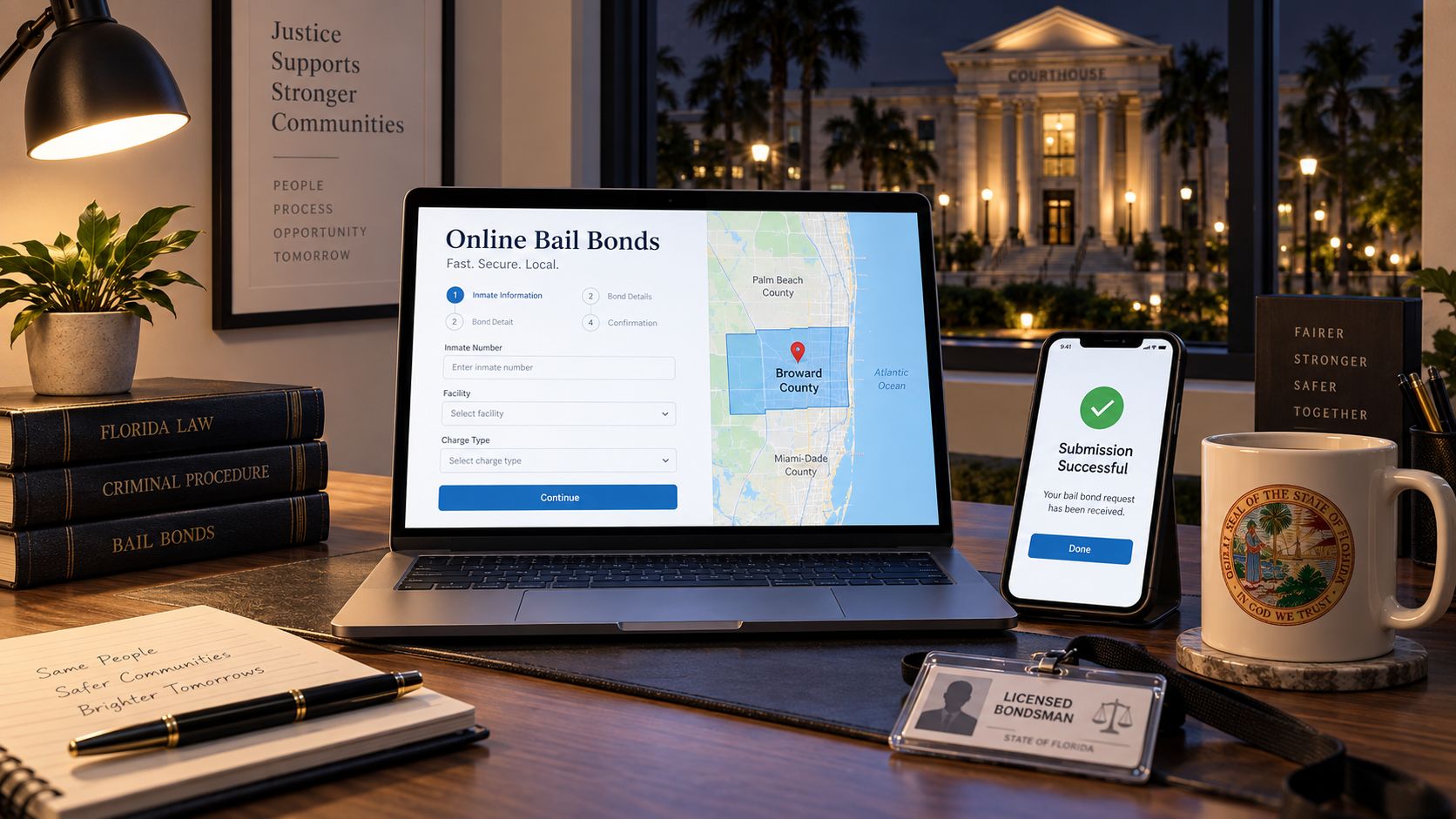
The family now faces a practical choice. A judge might approve release without money, impose supervision, set a monetary bond, or order detention under circumstances allowed by law. Before paying, gather the charge information and ask a licensed Florida bondsman, a defense lawyer, or the county pretrial services office what the current order requires. A plain-language explanation of the bonding process is available in this guide to how bond works in Florida.
What Pretrial Release Actually Means in Florida
Think of pretrial release as a temporary pass home while a criminal case continues. The person hasn't been found guilty, but release isn't unconditional. The court can require attendance at hearings, contact with a supervision agency, drug testing, travel limits, or other conditions designed to address appearance and safety.
Florida's framework starts with a preference for release on reasonable conditions, but that preference has important limits. Under Florida Statutes section 907.041, Florida law creates a presumption favoring nonmonetary release unless the person is charged with a dangerous crime or falls within another statutory exception. The law also addresses when detention may be considered and what conditions can be imposed.

The timeline matters
After arrest and booking, the person usually waits for first appearance before a judicial officer. At that hearing, the judge considers the charge, the person's history, appearance risk, community safety, and possible release conditions. The decision isn't the same as buying a product from a menu. A bond amount may appear in the jail record, but the judge can address release more broadly.
Florida also uses a uniform statewide bond schedule for offenses eligible for bond before first appearance. Under section 903.011, the Florida Supreme Court must adopt and circulate a revised schedule each year beginning January 1, 2024. The schedule creates a more predictable starting point for eligible offenses, but it doesn't bind a judge at first appearance or a later bail-determination hearing.
That distinction causes confusion. A scheduled amount may permit an earlier release process, but a judicial officer can override it based on the circumstances and legal requirements. A family should confirm whether the amount is available for posting now, whether a hearing is required, and whether other conditions or holds remain.
The Three Doors Out of Jail
A family may receive a late-night call with a bond amount already listed, yet that figure is only one possible route out of custody. Florida generally presents three release paths, and the practical differences involve cost, timing, paperwork, and supervision.
Door one is nonmonetary release. This may be release on recognizance, often called ROR, or supervised release with conditions. The person signs a promise to appear rather than posting money. Depending on the court's decision, conditions can include reporting to pretrial services, following a curfew, avoiding specified people, submitting to testing, or staying within an approved area. Transportation, phone access, and schedule flexibility can determine whether those conditions are manageable.
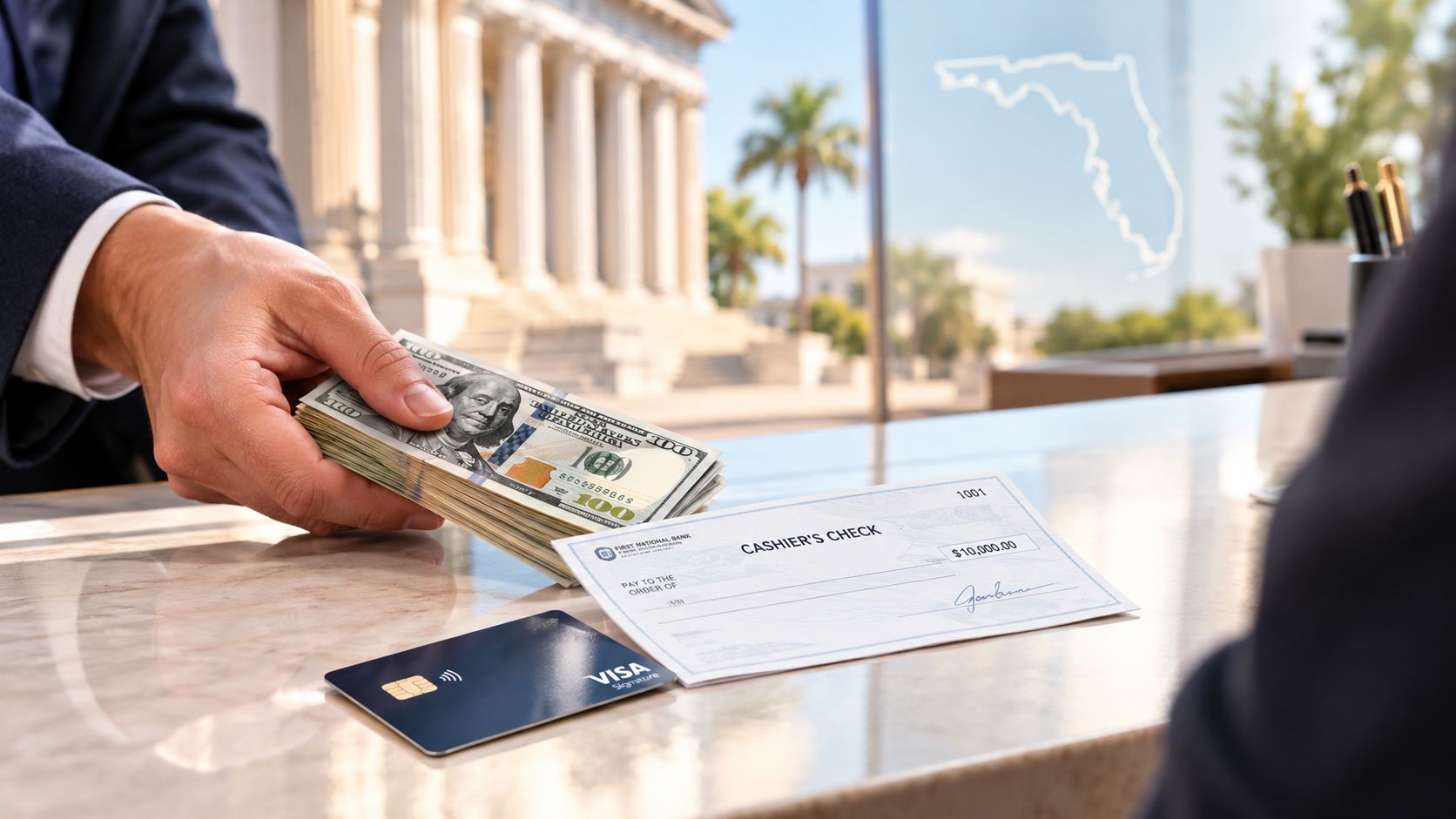
Door two is a surety bond. A licensed bondsman posts the required bond after the family completes the agency's paperwork and pays the legally permitted premium or uses an approved payment arrangement. The premium is generally not returned when the case ends. The bondsman backs the financial obligation, while the court's release conditions still govern the defendant's conduct. The family should ask what identification, signatures, payment, collateral, and follow-up contact the agency requires.
Door three is cash bail. The defendant or family deposits the full amount through the authorized clerk or facility process. The amount may be returned under the court's rules and the case's outcome, but the family must have access to all of it and handle payment verification, receipts, and any required follow-up.
Comparing the Three Release Paths in Florida
| Release Type | Typical Cost to Family | Usual Processing Needs | Ongoing Supervision |
|---|---|---|---|
| Nonmonetary release | No bond payment, though conditions may create practical costs | Judicial approval, signed conditions, and enrollment or reporting instructions when required | May include reporting, testing, curfew, or other court-ordered conditions |
| Surety bond | Premium and possible approved fees or collateral | Agency application, required documents, payment arrangement, and jail processing | Court conditions remain; the bondsman may require contractual check-ins |
| Cash bail | Full bond amount deposited | Authorized payment, verification, receipt, and facility processing | Court conditions remain |
The statewide schedule can provide a starting monetary amount for eligible offenses, but it does not settle every release question. Families can review this immediate Florida release guide while confirming whether the listed amount is available, whether a hearing is needed, and whether another hold or condition remains.
The useful comparison is not which door costs less. It is which path the person can follow reliably. A no-cost release may fail if reporting requires transportation the defendant does not have. A surety bond may preserve the family's savings, but it still requires compliance with every court order and every agreement made with the bondsman.
How Florida Decides Who Gets Released
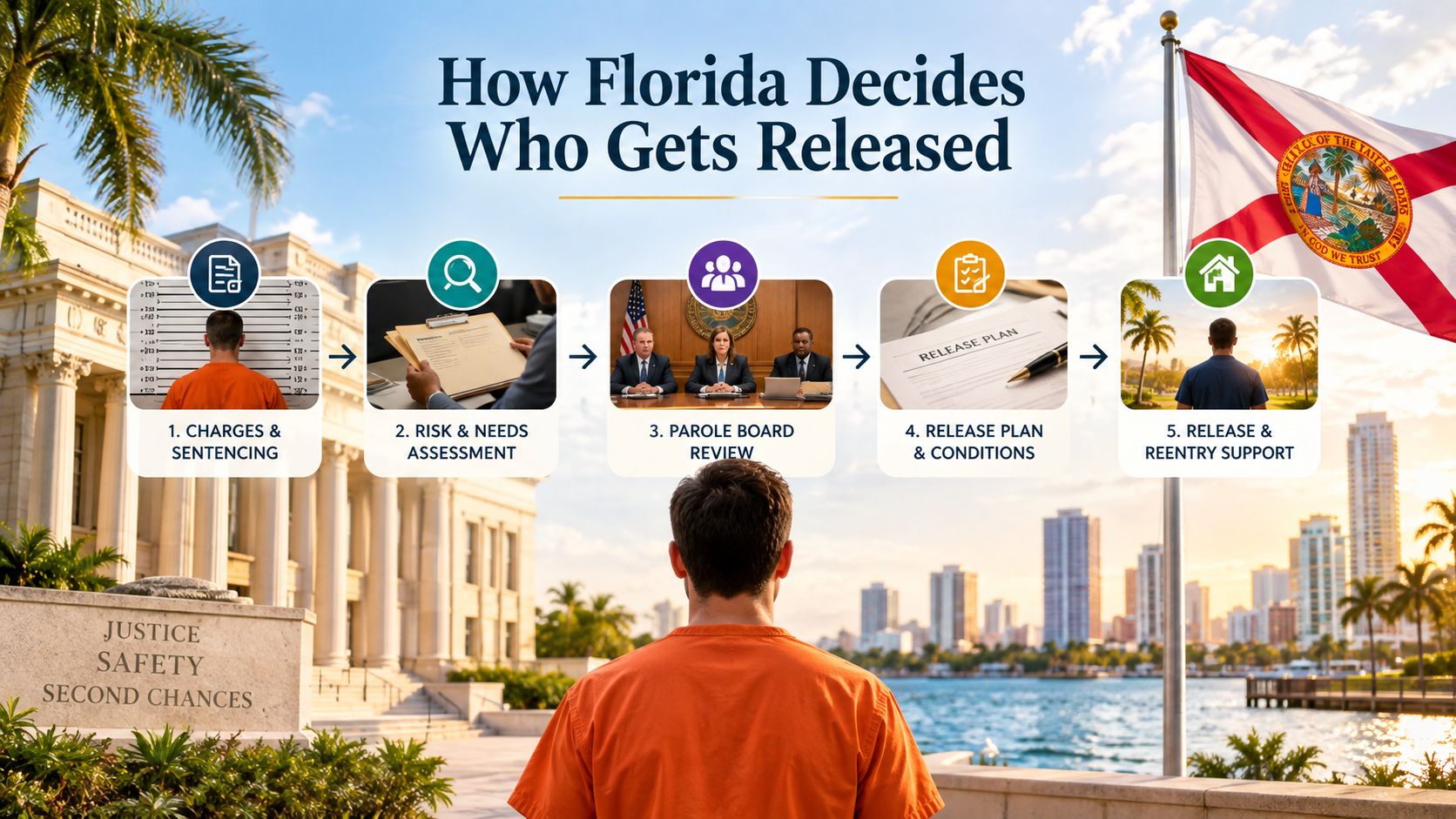
A late-night release decision rarely comes from one score. Florida courts may use the Florida Pretrial Risk Assessment Instrument, then apply the statutory factors in section 903.046. The judge may examine the alleged offense, the strength of the evidence, community ties, residence, employment, financial resources, criminal history, prior failures to appear, mental condition, and possible danger to the community. Families can review the factors judges consider when setting bail before discussing the case with counsel.
The assessment organizes information. It does not make the legal decision. Local programs may have their own eligibility rules involving residence, excluded charges, prior court history, and available supervision. As a result, pretrial release may operate differently from one county to another. A person may qualify on paper yet still need a judge to approve the conditions.
How a recommendation becomes a release plan
A low-risk recommendation may support ROR or another less restrictive option. A moderate concern may produce weekly reporting, a curfew, location monitoring, testing, or no-contact conditions. A higher concern may result in a monetary bond, closer supervision, or detention when the legal standard is satisfied.
For example, someone facing a first-time misdemeanor charge with stable housing and reliable work might receive release with weekly reporting and a curfew. That recommendation is not a promise. The judge still reviews the specific charge and record. Someone facing a serious qualifying charge, with a history covered by a statutory detention category, may remain in custody while the court considers whether conditions can protect the community and support court appearance.
Practical rule: Bring facts the assessment may not show clearly. Useful documents can include a verified address, an employer's confirmation of continued work, transportation arrangements, treatment participation, or a responsible person who can help monitor compliance.
Defense counsel can correct inaccurate information, explain old or resolved cases, identify assessment errors, and suggest conditions addressing the judge's concerns. Families should ask counsel what release data applies to the local program, including failure-to-appear and new-offense outcomes, then compare supervised release with a surety bond based on the person's ability to follow each plan.
What Happens After Release
Release is the beginning of a set of obligations, not the end of the process. The order may require GPS or radio-frequency monitoring, drug or alcohol screening, scheduled check-ins, travel restrictions, a curfew, treatment, or no contact with an alleged victim or witness. The exact requirements depend on the judge and the county program.
A pretrial officer may communicate by phone, electronic portal, office appointment, or another approved method. The defendant needs to know the reporting schedule, keep contact information current, ask before traveling, and preserve proof of compliance. A missed call can become more serious when the person ignores follow-up messages or cannot explain the absence.
Florida law also permits release consequences for material violations. Under section 903.0471, violating a material pretrial condition or committing a new crime can trigger revocation and detention. The safest response to a problem is immediate contact with counsel and the supervising agency, not silence.
What the available data shows
Statewide reporting gives families a useful baseline, but it doesn't predict one person's result. The 2023 OPPAGA report stated that all reporting pretrial programs had failure-to-appear rates below 7%, and the statewide average successful completion rate was 76%. Of the programs that reported completion data, 24 of 30 had successful completion rates of 70% or higher.
Miami-Dade's data shows why local results deserve separate attention. Its 2026 annual report recorded 5,978 people released into Pretrial Services, with 8% failing to report to a court hearing and 9% arrested on a new offense while in the program. Those figures shouldn't be treated as a statewide rate or as a direct prediction for a particular defendant.
Pretrial Release Outcomes in Florida
| Release Type | Failure-to-Appear Rate | New-Offense Rate |
|---|---|---|
| Statewide reporting programs | Below 7% in every reporting program | Not provided in the cited statewide data |
| Miami-Dade Pretrial Services | 8% | 9% arrested on a new offense |
A missed curfew, ignored reporting appointment, or unauthorized trip can create a violation problem before any new criminal allegation occurs. Read the order line by line, and ask the supervising office what to do when transportation, work, illness, or technology interferes with compliance.
Common Misconceptions Families Bring to the Phone
Myth one: The schedule amount is final. Florida's statewide bond schedule creates a starting point for eligible offenses, but it doesn't prevent a judge from changing the amount or imposing different conditions. Under section 903.011, the schedule doesn't bind the judge at first appearance or at a later bail hearing.
Myth two: Hiring a bondsman always makes release faster. It can help when a monetary bond is available and the family needs assistance posting it. But if the judge approves ROR or supervised release, there may be no bond to post. Paying for a surety bond in that situation can add expense without creating a legal benefit.
Myth three: Released on bond means free. It means the defendant is outside custody subject to the court's conditions. A person can return to jail after a material violation, a new crime, or another event covered by the release order and section 903.0471.
What has and hasn't settled
Florida's rules continue to require careful attention to court decisions and local procedures. A 2024 appellate report on Florida's pretrial-release law described a ruling that struck part of the 2023 law as unconstitutional. That means families shouldn't assume a general online explanation captures every current rule.
Ask the county's pretrial services office whether the person qualifies, what screening information it uses, and which conditions are likely. If the charge, residence, prior appearance history, or local administrative order creates an exception, a defense lawyer can explain the available challenge or hearing.
A Practical Playbook for the First 48 Hours
The first hours feel chaotic, so use a written sequence. Start with information, then prepare for the hearing, then decide whether a surety bond is necessary.
- Save the booking number. Record the full name, date of birth, facility, charges, and the phone number used for jail information.
- Ask about the next court event. Confirm first-appearance timing, the listed bond status, holds, and any immediate medical concern.
- Request the arrest paperwork. Ask how to obtain the arrest affidavit or booking documents through the county's approved process.
- Prepare a release file. Gather proof of residence, an employer contact, transportation information, treatment details, and the name of a responsible support person.
- Call the right office. Contact pretrial services if nonmonetary release may be available. Contact a licensed bondsman if the court has set a monetary bond that the family can't post directly.
- Protect the case. Don't discuss the incident, alleged victim, witnesses, or possible defenses on a recorded jail line. Route legal questions to defense counsel.

Useful scripts for stressful calls
To the jail: “I'm calling about [full name]. I have the booking number. Can you confirm the listed charge, whether a bond amount appears, the first-appearance information, and whether there are any holds?”
To a bondsman: “What bond amount do you see, what documents do you need, what premium and payment terms apply, and does posting this bond address every hold?”
To pretrial services: “Can you explain the eligibility requirements, reporting method, monitoring conditions, and what the defendant must do immediately after release?”
Tape this checklist somewhere visible:
- Booking number saved
- Charges and holds confirmed
- First appearance confirmed
- Medical needs reported
- Arrest paperwork requested
- Housing and employment documents gathered
- Pretrial services contacted
- Licensed bondsman contacted if needed
- Travel, curfew, and reporting rules understood
- Court dates placed on a shared calendar
Don't arrange unapproved travel or assume an out-of-county address will be accepted. A proposed release plan works only when the defendant can follow it.
Choosing the Right Release Path for Your Family
The best choice is the one that matches the person's circumstances and the court's conditions. Supervised release may avoid a bond payment, but it can require regular reporting, monitoring, testing, or travel restrictions. A surety bond may help a family handle a monetary requirement without depositing the full amount, but the premium usually isn't refundable and the court's conditions still apply. Cash bail can avoid a bondsman's premium, yet it ties up the full deposit and requires the family to manage the court's refund and forfeiture rules.
The available outcome data supports a careful comparison rather than a one-size-fits-all answer. Statewide programs reported relatively low failure-to-appear levels, while Miami-Dade's reported Pretrial Services outcomes included both missed hearings and arrests on new offenses. Those differences make county practices, supervision level, charge type, and personal reliability important parts of the decision.
Comparing Florida Pretrial Release Options for Families
| Release Option | Typical Cost to Family | Supervision Level | Refundable? | Best Fit For |
|---|---|---|---|---|
| Nonmonetary or supervised release | No bond payment, but compliance may create transportation or monitoring costs | Set by the court or program | No deposit to refund | People with a workable address, reliable communication, and a realistic compliance plan |
| Surety bond | Premium, with terms set through a licensed agency | Court conditions apply; agency requirements may also apply | Premium generally isn't refundable | Families that can't or don't want to deposit the full bond amount |
| Cash bail | Full monetary amount deposited | Court conditions apply | May be refundable under applicable court rules | Families able to tie up the full amount and manage the court process |
Before choosing, ask:
- Can the person attend every hearing and reporting appointment?
- Is the proposed address approved and stable?
- Can the family absorb a nonrefundable premium or a full cash deposit?
- Are there travel, work, medical, or transportation issues?
- Does the person understand every condition in writing?
- Is there another hold that makes this bond insufficient?
For Miami-Dade and nearby Florida cases, a licensed agency may help with bond paperwork, payment arrangements, release logistics, and questions about court appearances. Blandon Bail Bonds, Inc. provides those services for families arranging release, including Miami-Dade matters, and can be reached through Blandon Bail Bonds, Inc..
If someone you love is in custody, gather the booking information and current bond status first, then contact Blandon Bail Bonds, Inc. for help reviewing the surety-bond process, paperwork, and release logistics. Visit Blandon Bail Bonds, Inc. to start the conversation and get practical guidance for the next step.