Monroe County Bail Bonds and Release Guide
Learn how Monroe County bail bonds work, including jail intake, release steps, costs, payment plans, transfer bonds, and choosing a licensed agent.
A call from the jail changes the whole day. One minute you're trying to understand who's holding your loved one, where they were booked, and whether anyone has set a bond, and the next minute you're juggling phone numbers, paperwork, and questions you didn't expect to face. In Monroe County, those questions matter fast, because custody can move quickly and the release path depends on the exact facility, the exact charge, and the exact bond status.
Families usually want one answer first, can they get out today. The answer starts with confirming where the person is being held, whether they were taken to the Monroe County Detention Center, and whether a judge has already set a release amount. For a broader overview of the first phone call and what to verify before you pay anything, see this Monroe County arrest guide.
When a Loved One Is Arrested in Monroe County
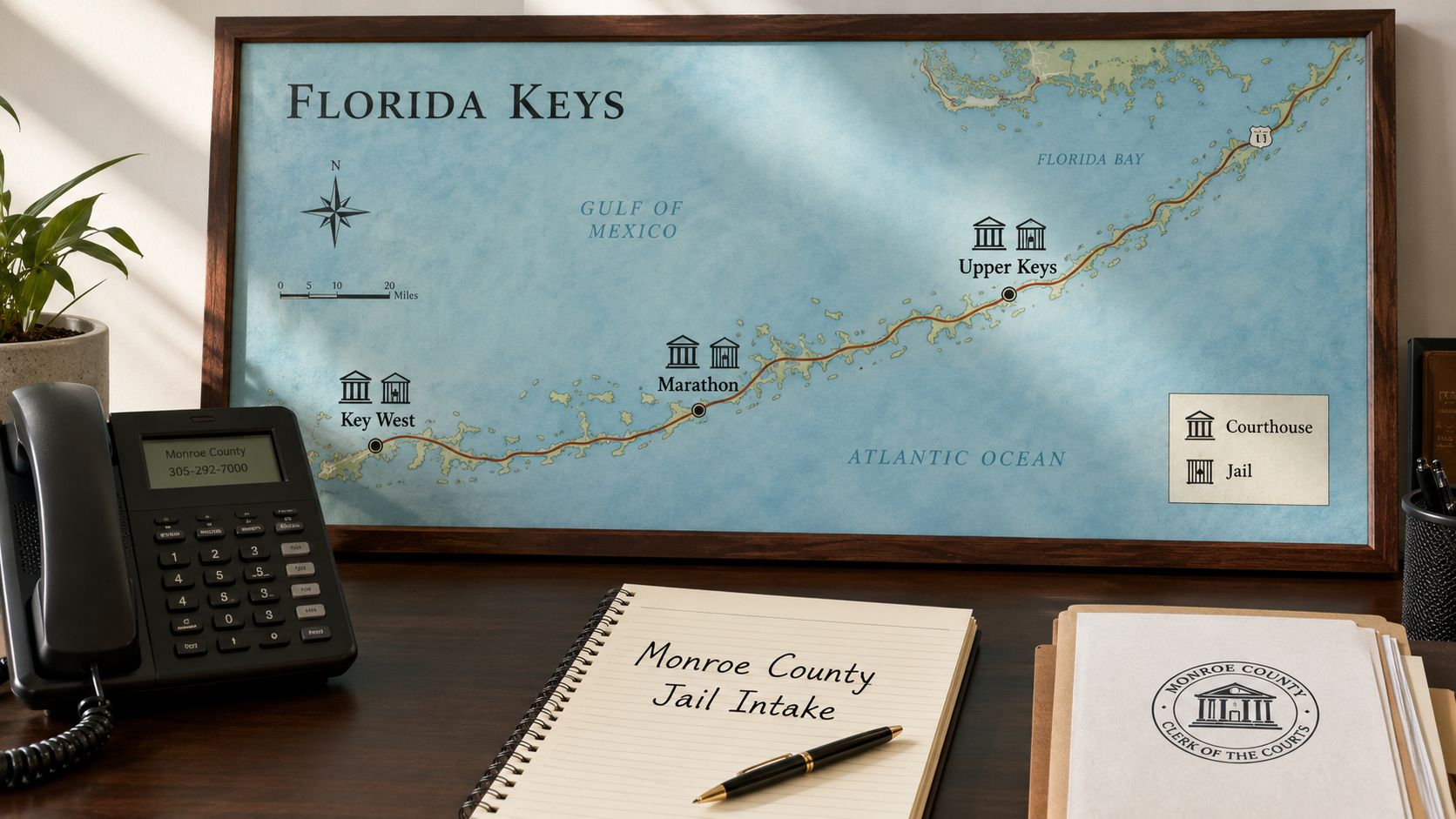
A family in Marathon gets a late-night call. Someone has been stopped, arrested, and moved before anyone had time to write down the officer's name or the exact charge. By morning, one relative thinks the person is in Key West, another thinks the booking happened in the Upper Keys, and nobody knows whether the arresting agency already turned the person over to county custody.
That confusion is common, and it's the first thing to clear up. Before anyone calls a bondsman, the family should confirm which law enforcement agency made the arrest, where the person is booked, and whether the person is in Monroe County custody or still with another agency. A name, date of birth, and booking number can save a lot of wasted calls, but the facility matters just as much.
Start with custody, not assumptions
A jail call, an inmate roster, or a lawyer's intake note can point the family in the right direction. If the arrest happened in the island chain, transport may already have occurred, or it may still be in motion. That's why “they were arrested in Key West” is not enough on its own.
Practical rule: Don't arrange payment until you know who has custody and whether a bond is already set.
If you're comparing process guides, this Monroe County bail process overview can help you understand the sequence, but it won't replace the need to verify the actual booking details in front of you. The right next step depends on the facts in that specific file, not on the arrest story as it was told over the phone.
Understanding Bail and Bond Options
A bail amount is the court's way of deciding what will encourage a return to court. Sometimes that means cash, sometimes a bond, and sometimes release without payment if the judge allows it. Families often hear “bond” and assume there is one standard path, but Monroe County bail bonds work through several release options, and the right choice depends on the actual order in the case.
Cash, surety, recognizance, and signature release
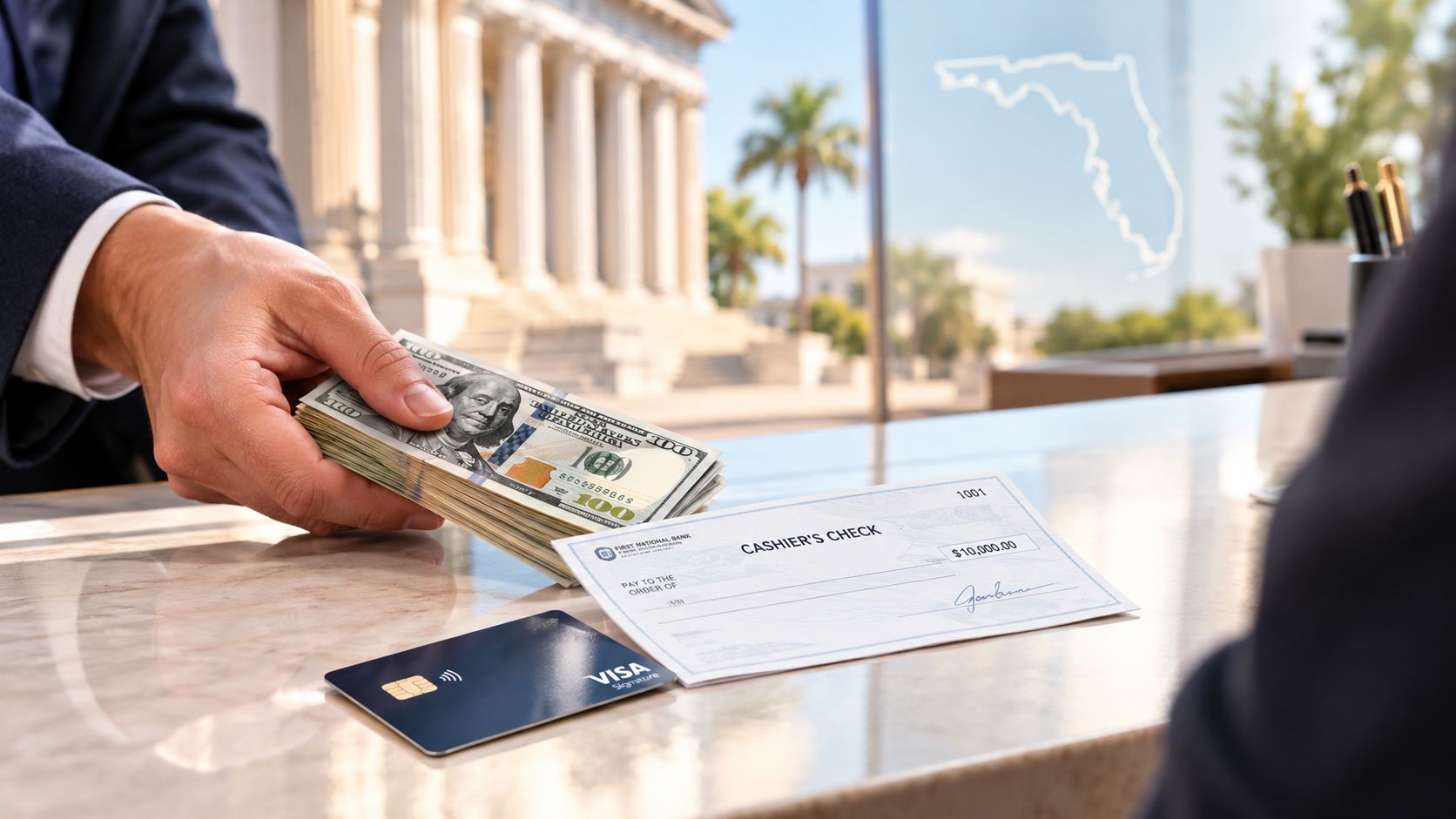
A cash deposit goes directly to the clerk or sheriff under Florida's statutory framework. In a surety bond, a licensed agent posts the bond on the defendant's behalf after the family signs the paperwork and, when needed, provides collateral or other assurances. A signature bond or release on recognizance may require no upfront payment if the court allows it.
The difference is easier to see with a simple comparison. Cash deposit is like paying the court's security deposit yourself. A surety bond works more like bringing in a financially responsible backer, who promises the court the defendant will appear and takes on the risk if they do not. The family still needs to understand the terms, but the payment path changes.
Florida's appearance-bond structure uses a 10% cash deposit model, with the clerk returning 75% of that deposit at the end of the case and retaining 25% as bail costs under the state framework and Monroe County guidance in the provided references. That is one reason surety bonds still come up often. The court sets the bond, but the family still has to choose how to satisfy it.
Eligibility is where many families get stuck. A judge can allow one type of release, several types, or none at all, depending on the charge, the person's history, and any holds. The first conversation should center on what the court ordered, not on whether a friend knows a bondsman.
For a plain-language explanation of the county process, this Monroe County bail guide is a useful companion after you have confirmed the basic release status.
Monroe County Jail Intake and Release Logistics
An arrest does not end at the roadside or the station. In Monroe County, the process starts again at intake, and that first stage works like a checkpoint at an airport, every detail has to match before the next step can happen. If the booking information, a hold, or a transfer note is off, families can lose time while the jail sorts out the file.
Why location and holds change the clock
A person picked up in Key West, Marathon, or the Upper Keys may be booked somewhere different from where the family first expects. After intake, the jail still has to complete classification, identity checks, health screening, and property inventory before release can move forward. If another agency has a hold, or if there is an immigration detainer, a bond may be posted and the person may still stay in custody.
The bond amount alone does not decide release. Active holds can stop the process even when the bond is ready.
That is why Monroe County families should read the release order as a whole, not as a single number on a screen. The jail environment changes as bookings, releases, and transfers come through, so the information from one phone call may already be stale by the next. Families do better when they confirm the current custody status before they commit money or paperwork.
What to verify before moving money
Start with the exact facility. Then confirm the booking status, whether intake is complete, and whether a bond has been entered into the file.
After that, check for any holds and transfers that could delay release, including requests from another agency or a move to a different location. Ask who can accept payment, what form it must take, and whether the person posting the bond needs to bring specific identification or paperwork.
For a plain-language explanation of the county process, this Monroe County jail guide is a useful companion once the custody details are confirmed.
How to Secure Release Step by Step
Families usually move too fast at first. A bond amount appears, and it can feel like payment should solve the whole problem. In Monroe County, the jail still needs the right name, the right booking number, the right facility, and the right bond type before release can move ahead. Treat the process like a checklist, not a single payment.
Step 1, confirm the file before you pay
Start with the legal name, booking number, facility, and exact charge. If even one detail is off, the bond may not post the way you expect. Check whether the court file allows a cash deposit, a surety bond, or a restricted option because of a hold or special condition.
Step 2, gather the documents
The person signing for the bond, often called the indemnitor or cosigner, should have a photo ID, proof of address, and any requested collateral paperwork ready. A utility bill or lease agreement is often the kind of address proof families can locate quickly. If a payment plan is being discussed, the agent may also ask for proof of income or other financial details.
Read the indemnity agreement before anyone signs it. That document explains what happens if the defendant misses court or breaks the bond conditions, much like reading the rules before you hand over a set of house keys.
Step 3, post and confirm release instructions
After payment, ask who is posting the bond, what receipt you should get, and what the facility expects next. Release can still slow down because of jail workflow, paperwork review, or conditions the defendant must understand before walking out. No-contact orders, ignition interlock, and reporting requirements still apply once they are in place.
Practical rule: Get the release conditions in writing and keep them with the first court date.
A licensed agency can help families sort out the paperwork side, and one option in Florida is Blandon Bail Bonds, Inc.. It still helps to verify the jail details first, but the right help can reduce confusion when the family is trying to match the bond, the facility, and the release instructions.
Costs, Payment Plans, Collateral, and Transfers
Families usually compare release options by price first, but price only makes sense if you know what kind of bond you're funding. A cash deposit, a surety bond, a signature bond, and a collateral-backed arrangement all move money differently, and the nonrefundable portion is not the same in each case. Florida's bond framework also creates a clear distinction between what goes to the court and what is paid to the agent.
Comparing the main funding paths
| Monroe County Bond Funding Options Compared | Who Pays | Key Consideration |
|---|---|---|
| Cash deposit | The defendant or family pays the court directly | The court controls the refund rules and release still depends on conditions being met |
| Surety bond | The family pays a licensed agent | The premium is separate from court costs, and the contract controls the risk if court dates are missed |
| Signature bond | The defendant signs, if approved by the court | No upfront cash may be required, but approval is entirely court-driven |
| Collateral-backed bond | The family pledges property, a vehicle, or similar security | The value, title status, and paperwork matter just as much as the bond amount |
| Transfer bond | An outside surety coordinates with Monroe County | Local jurisdiction rules and paperwork can affect timing |
Read the contract before you sign
Payment plans vary. Some agents ask for a down payment and then schedule installments, while others require collateral or different forms of security. If a payment is missed, the contract usually spells out what happens next, so families need to read those clauses before they agree to anything. That's especially true when the arrangement involves collateral, because title documents and ownership issues can create extra steps.
Transfer bonds add another layer. If the family starts with an out-of-county surety, that agent may still have to coordinate with Monroe County procedures before release can move forward. The file has to be correct on both sides, and the facility has to accept the bond in the form presented.
The safest habit is simple. Ask for the fee breakdown, ask what is refundable and what is not, and ask who is responsible for the actual posting. Then keep copies of everything.
How Case Types Can Change the Bond Process
Not every Monroe County case behaves the same way. A standard misdemeanor or felony file often follows the published bond schedule and the usual posting path, but some charges trigger extra conditions that change who can release, when release can happen, or what must be signed before the person leaves. The bond amount is only part of the story.
Charges that often add conditions
Domestic violence allegations can bring no-contact orders, court-ordered programming, or monitoring conditions that affect both release eligibility and how the bond is handled. DUI cases may involve device-related or driving-related conditions tied to the court order, and the family needs to understand those requirements before the person is picked up. Immigration-related situations can also change the picture, because a state bond doesn't necessarily resolve a separate ICE detainer or custody transfer issue.
Federal matters are different again. If the case is routed through the Southern District of Florida, the bond decision comes from a federal magistrate, not the county schedule, and the conditions can be much stricter than a local file. Out-of-county warrants and transfer situations create similar confusion, because the Monroe County case may be moving at the same time another jurisdiction is waiting to act.
Clarify every active hold first
That is why the first release question should always be, “What else is attached to this file?” A family can pay the posted bond and still not see release if another county, a federal authority, or an immigration hold is still active. If there's any doubt, the family should ask the jail, the attorney, and the bondsman the same question before money changes hands.
| Case Type | What Changes |
|---|---|
| Standard criminal case | Usually follows the county bond order and posting process |
| Domestic violence case | Often adds no-contact and supervision conditions |
| Immigration-related case | May involve a separate custody issue beyond the county bond |
| Federal case | Uses federal bond procedures and federal decision-makers |
| Transfer or out-of-county case | May require coordination across jurisdictions before release |
The point is not to make the process sound harder than it is. The point is to keep families from paying for the wrong release path.
Choosing a Licensed and Reliable Bondsman
A stressed family can get rushed into paperwork fast, and that's where bad decisions happen. A licensed Florida bondsman should be able to explain the booking facility, the charge, the bond type, and the next step without guessing. If the agent can't identify the custody location or keeps changing the story, slow down.
What to verify before signing
Use the Florida Department of Financial Services to confirm the agent's license number, and ask about insurance and any disciplinary history before you sign. That basic check matters because the bond is a legal contract, not just a convenience service. You should also compare fee disclosures, cancellation terms, and after-hours availability across more than one provider.
Red flags are easier to spot when you know what to listen for.
- Unclear pricing: If the agent can't explain premium, fees, and collateral in plain English, that's a problem.
- Pressure tactics: If you're pushed to sign before reading, stop and review the paperwork.
- Strange promises: If the agent promises an outcome they can't control, take that as a warning sign.
- Facility confusion: If they can't name the jail or the jurisdiction, they may not be ready to help with your file.
Ask who handles paperwork at the Stock Island detention center, how transfer bonds are coordinated, and what the family should expect after release. Those operational details tell you more than a sales pitch does. The right provider should sound organized, not vague.
A reliable bond agent makes the next step clear. A careless one makes the whole process noisier.
Family Answers and Final Release Checklist
Families usually ask the same questions at this point, and the honest answer is that release timing depends on the file, the holds, and the facility's processing queue. There isn't a fixed minute on the clock that works for every case. If a court date is missed later, a warrant can follow, and that can affect the existing bond as well as future release options.
A bond reduction motion can be possible in some situations, but it depends on the file and the court's willingness to review it. Families shouldn't assume that every bond can be lowered just because the amount feels high. If there's already an active warrant or another jurisdiction is involved, that issue needs attention before any new payment is made.
Final checklist before you leave the phone call
- Confirm the defendant's exact location and custody status.
- Verify the exact charge and bond amount.
- Write down the licensed bondsman's name and contact details.
- Bring the correct ID and payment method.
- Review all release conditions, including no-contact rules and driving restrictions.
- Put the first court appearance on the calendar immediately.
Release is only the first milestone. After the person gets out, the family still has to help them follow every court condition, keep every appearance, and preserve every receipt and document tied to the bond. That keeps the next steps cleaner and helps avoid new problems before the case is finished.
If you need help sorting out a Monroe County arrest, release paperwork, or the right bond path for a specific facility, contact Blandon Bail Bonds, Inc. for direct bail guidance and posting support. Visit Blandon Bail Bonds, Inc. to review your options and get help from a Florida bail agency that works with Monroe County cases and related transfer situations.